




How to Standardise Air Conditioning Quotes Without Losing Flexibility

February 10, 2026

Keeping consistency

Ask mostair conditioning business owners what frustrates them about quoting, and you’ll hear the same thing again and again: every quote feels different. Different layouts, different assumptions, different prices for similar work — sometimes from the same company, just a different engineer on a different day.


At the same time, nobody wants to turn quoting into a rigid, box-ticking exercise. HVAC work isn’t one-size-fits-all, and flexibility is often what wins jobs. The challenge in 2026 isn’t choosing between standardisation and flexibility — it’s learning how to have both.

Why inconsistent quoting creeps in so easily

Most air conditioning businesses don’t decide to be inconsistent. It happens naturally as companies grow. One person builds quotes one way, another uses a different spreadsheet, and someone else relies on memory and experience. Over time, those differences start to add up.


Materials are priced slightly differently. Labour allowances vary. Certain extras are included sometimes and forgotten other times. From the outside, customers don’t see the internal reasoning — they just see different prices for what looks like similar work. That can quietly erode trust and make it harder to explain why one quote costs more than another.


What standardising quotes actually means (and what it doesn’t)

Standardising quotes doesn’t mean stripping out professional judgement or forcing every job into the same template. In practice, it means creating a consistent framework that every quote is built from.


That framework might include agreed labour rates, standard inclusions, consistent language, and clear assumptions. Once those foundations are in place, engineers still have room to adjust based on site conditions, access, complexity, or customer requirements. The difference is that those adjustments are deliberate and visible — not accidental.


In other words, the structure stays the same, but the details can flex.

Why flexibility still matters in HVAC work

Air conditioning installations rarely behave like identical products. Even when two properties look similar on paper, surveys often uncover differences that affect time, materials, and complexity. Customers also value the sense that their situation has been properly considered, not just pushed through a generic pricing engine.


That’s why overly rigid quoting can backfire. If installers feel boxed in, quotes stop reflecting reality. If customers feel the quote doesn’t acknowledge their specific needs, confidence drops. The goal is consistency without losing the human element that experienced installers bring to the table.

The impact on efficiency and margins

When quotes aren’t standardised, businesses often don’t realise how much time is being lost. Engineers spend longer deciding how to price work, admin teams field more questions, and managers step in to approve or correct quotes that don’t quite look right.


Over time, this creates margin drift. Some jobs are underpriced without anyone noticing. Others are priced defensively and lose out to faster, clearer competitors. Standardisation helps lock in your baseline profitability while still allowing for variation where it genuinely matters.

Instant Quoting Software for HVAC Businesses

Save time, send quotes faster, and grow your air conditioning business with confidence

Share this article

How technology supports consistency without rigidity

By setting consistent rules around pricing, labour, and inclusions, while still allowing engineers to tailor outputs, businesses can protect margins and speed up response times at the same time. Quotes look professional, pricing logic is repeatable, and customers get clarity quickly.


This is where platforms like Quotestack fit naturally into modern HVAC operations. Rather than forcing installers into fixed packages, it provides a consistent quoting framework that can be customised to each business’s preferred manufacturers, pricing models, and profit margins — while still leaving room for job-specific adjustments. The result is structure without stiffness.

Why this matters more in 2026 than ever before

Customers are now used to fast, transparent pricing in almost every part of their lives. When HVAC quotes feel inconsistent or slow, it stands out — and not in a good way. Standardisation helps businesses respond confidently and quickly, while flexibility ensures the quote still feels considered and professional.

For air conditioning companies looking to grow without losing control, the balance between consistency and adaptability isn’t optional anymore. It’s a core part of staying competitive.


Getting that balance right doesn’t mean changing how you work — it means tightening the foundations so your experience and expertise can shine through more clearly.

Recent Posts

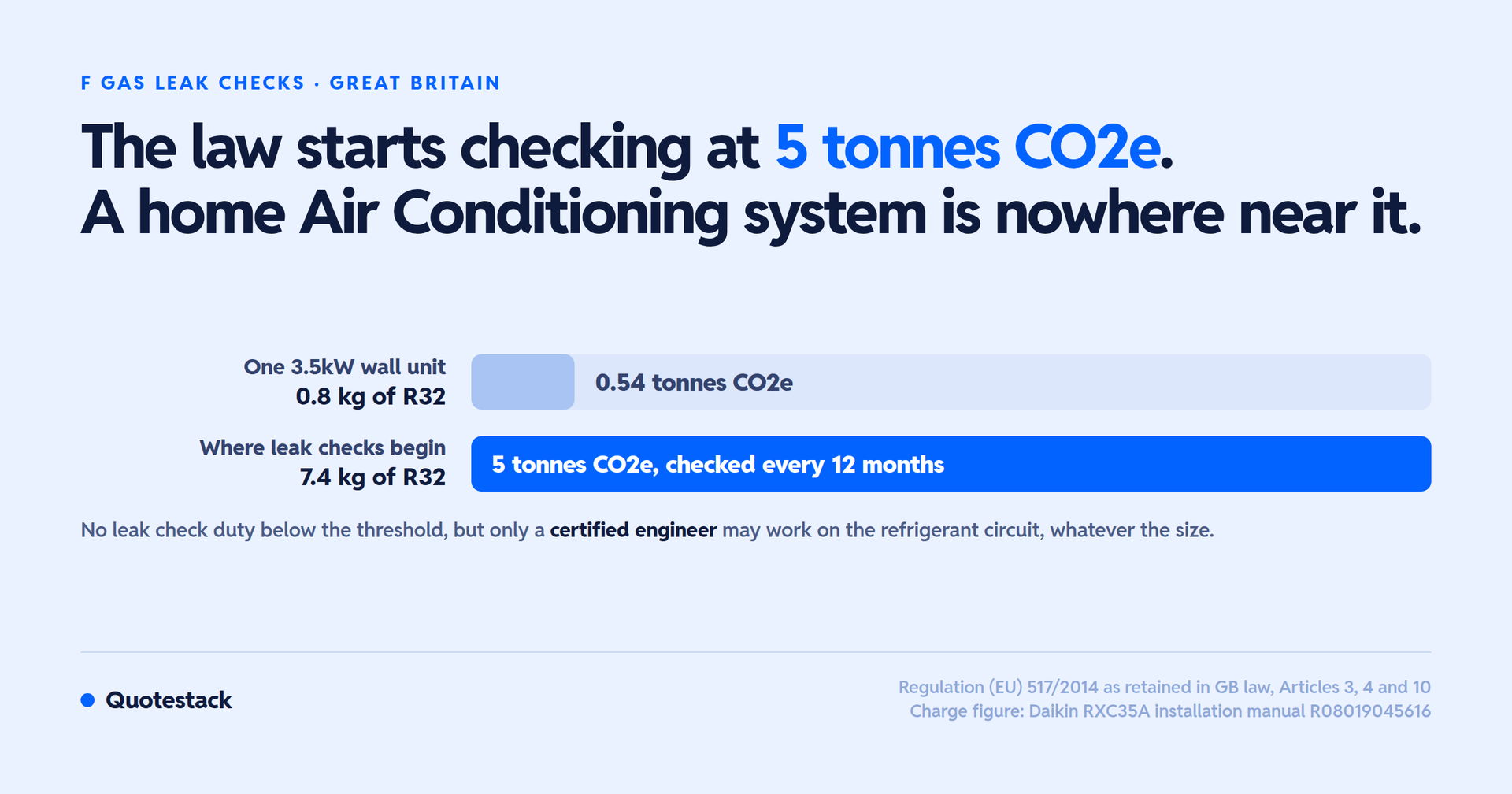
Two bars compared: one 3.5kW wall unit holds 0.54 tonnes CO2 equivalent of refrigerant, while leak c
By Francois Du Plessis • September 28, 2026
Most home Air Conditioning in Great Britain has no legal service requirement. The F Gas leak check duty starts at 5 tonnes CO2e, well above a home system.
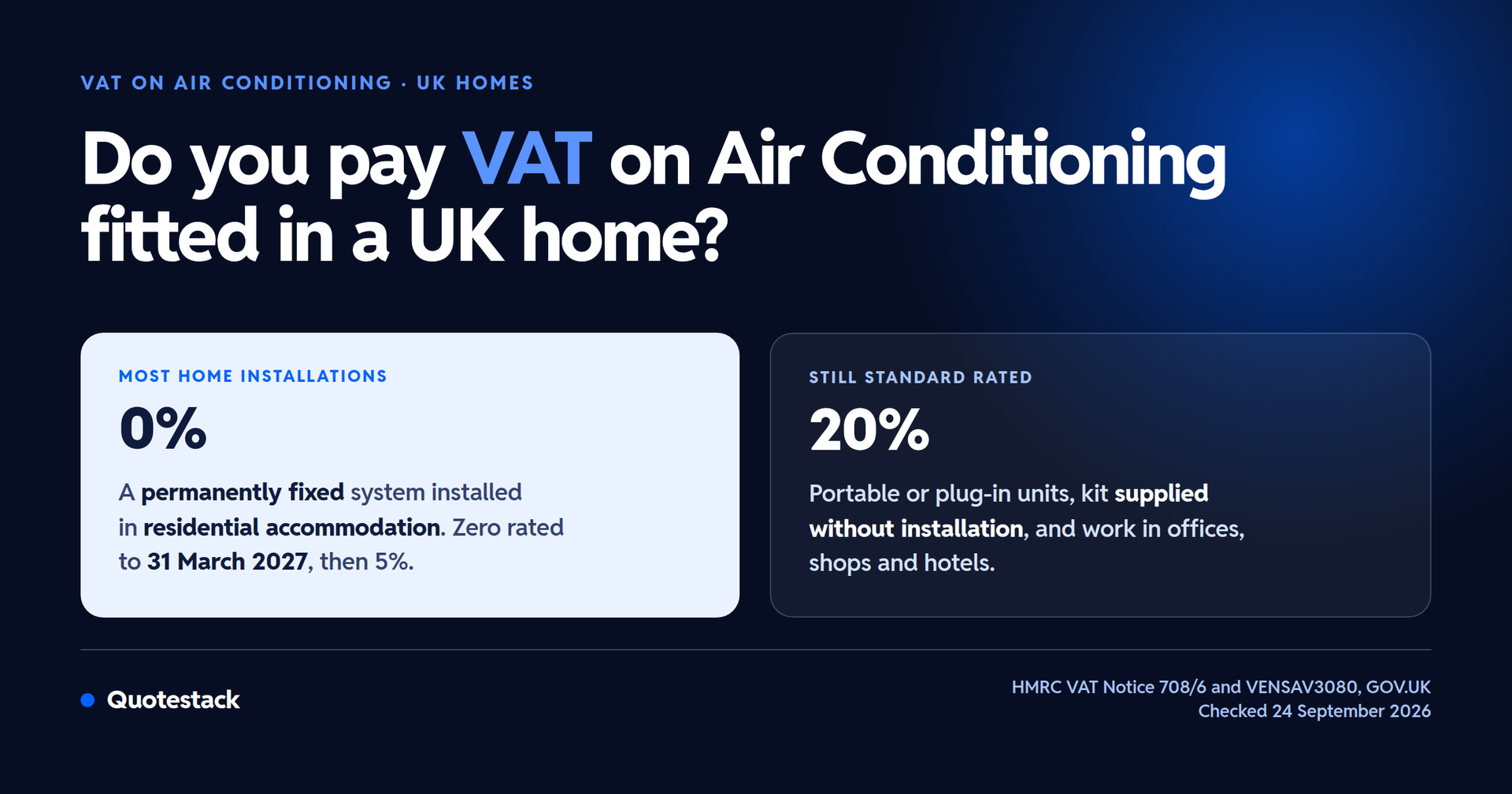
Two VAT outcomes compared for Air Conditioning in a UK home: a permanently fixed system in residenti
By Francois Du Plessis • September 25, 2026
Fixed Air Conditioning installed in a UK home is zero rated for VAT until 31 March 2027. Here is what qualifies, what still carries 20%, and what changes.
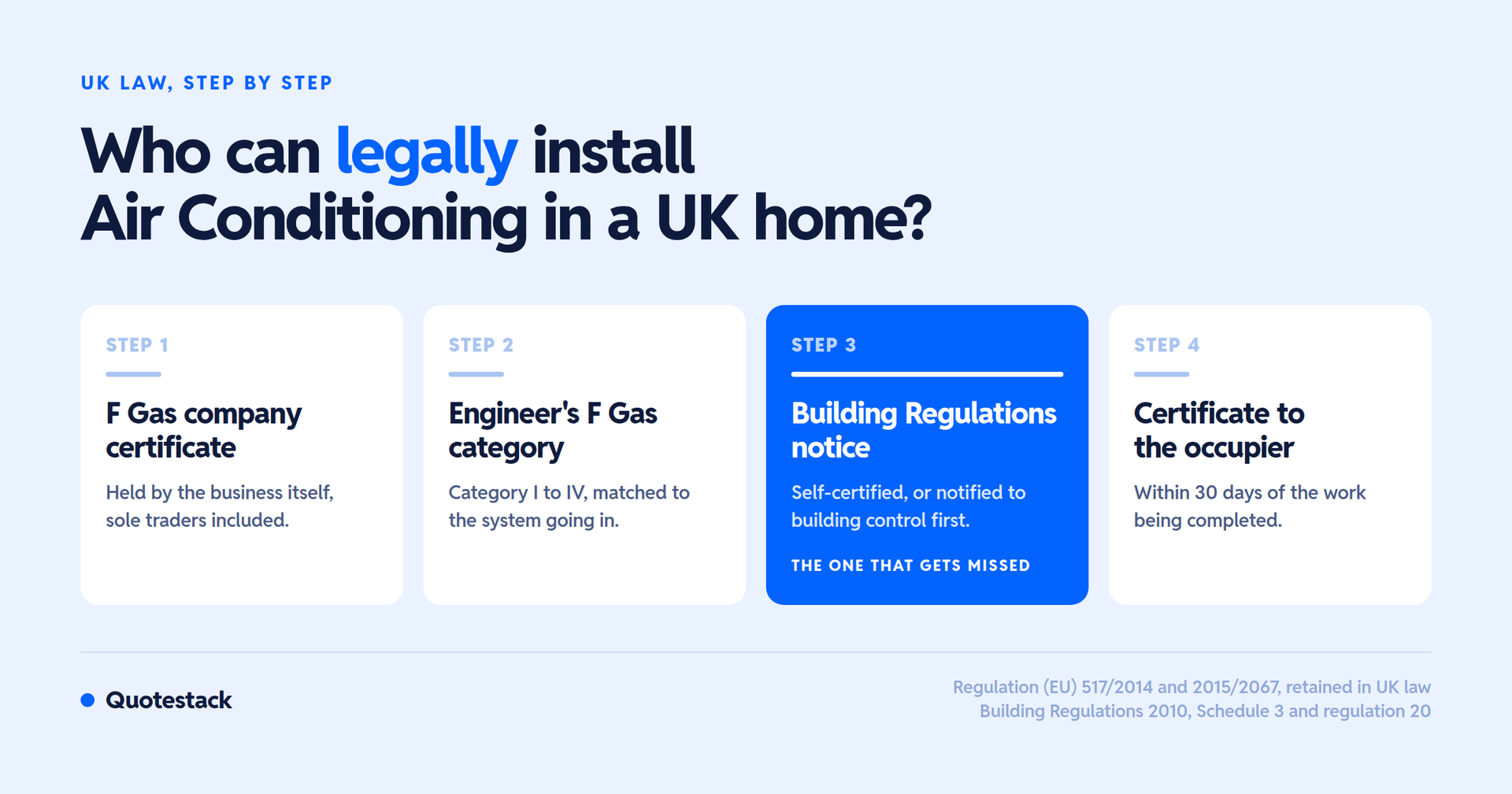
The four legal steps to install Air Conditioning in a UK home, from F Gas certificate to handover.
By Francois Du Plessis • September 21, 2026
The company needs an F Gas certificate, the engineer needs a category certificate, and in England and Wales the install is notified to building control.
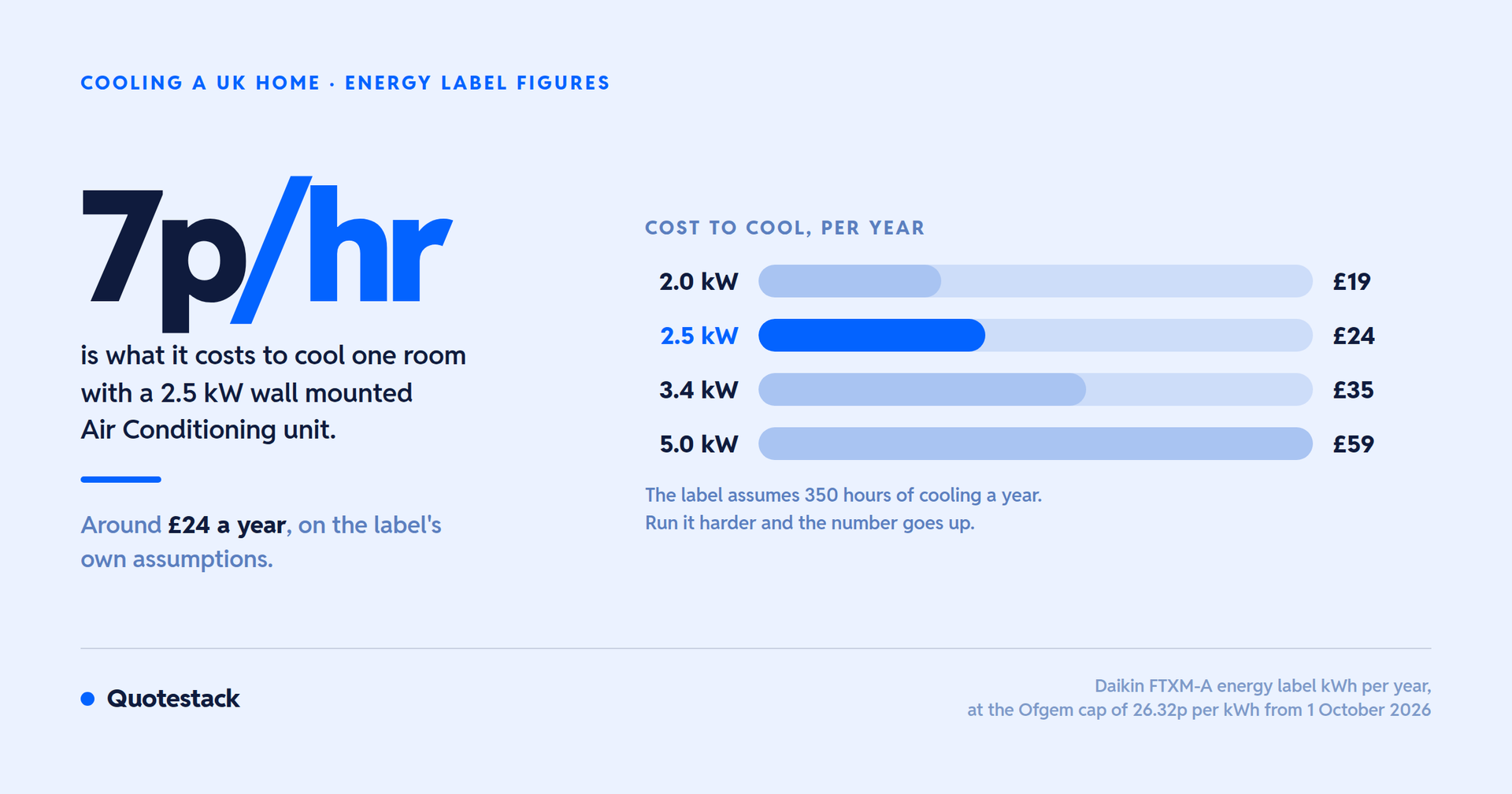
Cooling costs by Air Conditioning unit size: £19 a year for 2.0 kW up to £59 a year for 5.0 kW.
By Francois Du Plessis • September 21, 2026
A 2.5 kW wall unit costs around 7p an hour to cool, about £24 a year on its energy label. Here is where that figure comes from, and when yours is higher.
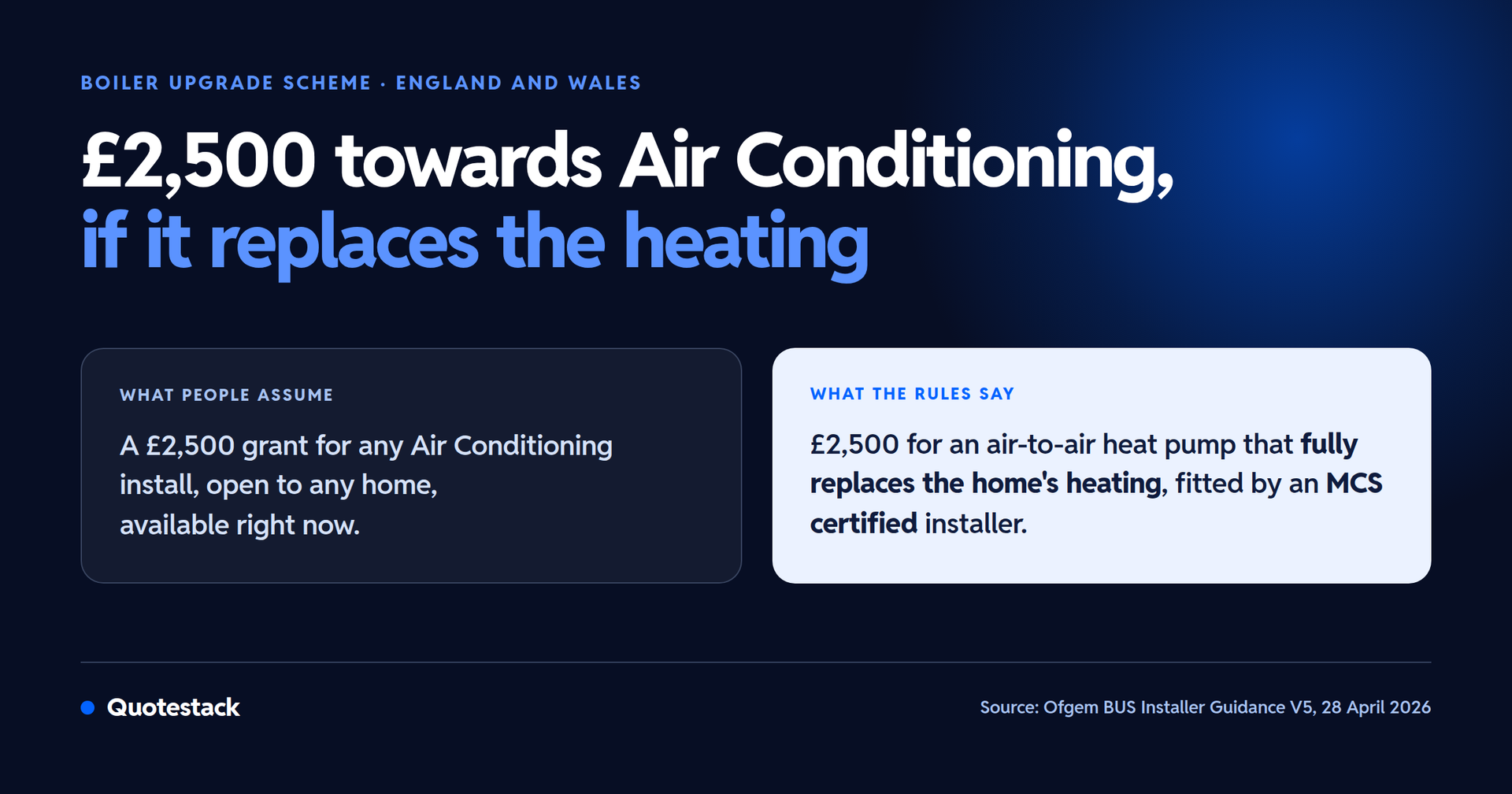
The £2,500 grant needs an air-to-air heat pump that replaces the heating, fitted MCS certified.
By Francois Du Plessis • September 14, 2026
Yes. The Boiler Upgrade Scheme pays £2,500 towards an air-to-air heat pump in England and Wales, but only if it fully replaces the home's existing heating.
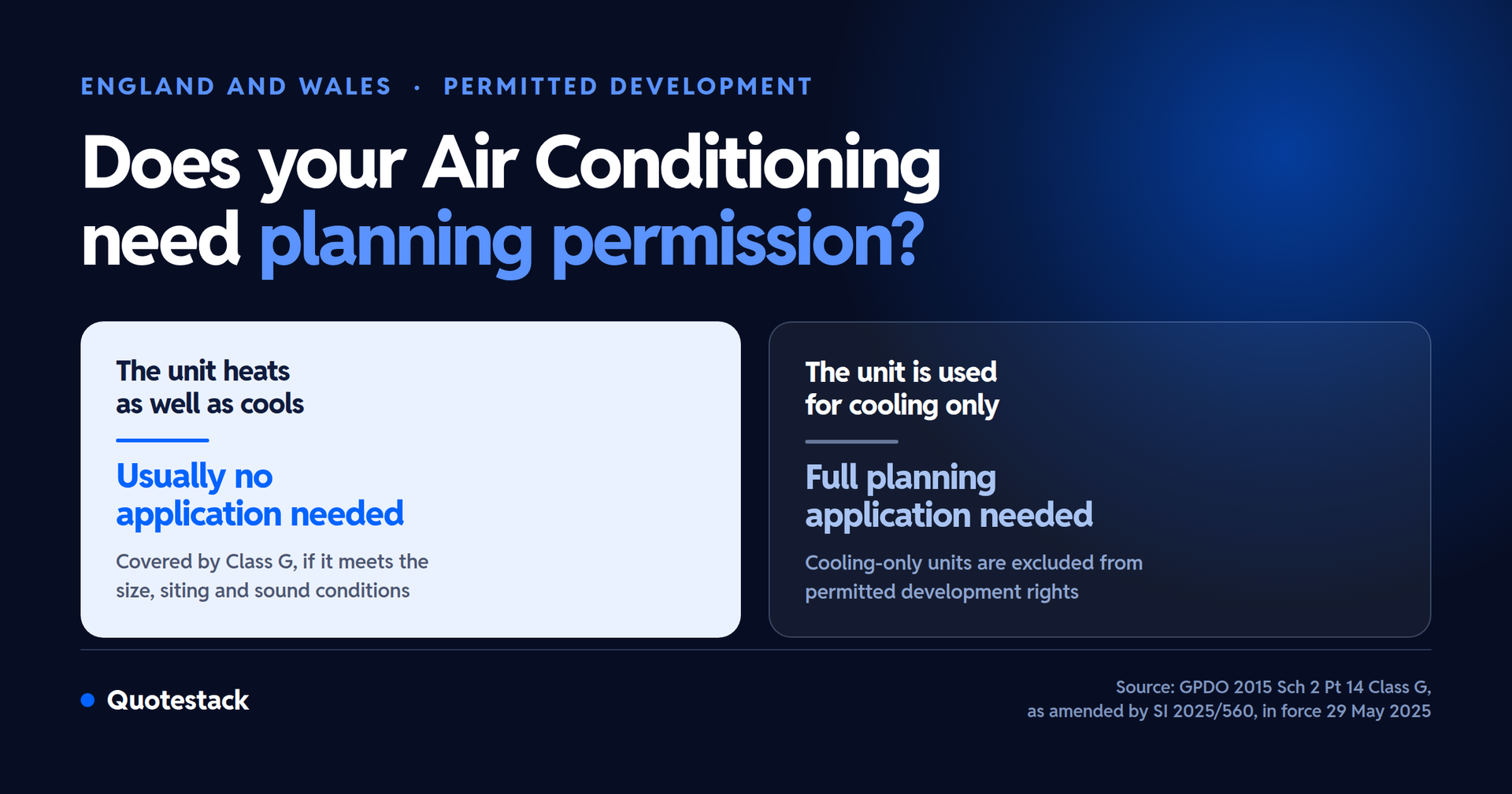
Air Conditioning that also heats usually needs no planning permission, cooling-only units do.
By Francois Du Plessis • September 11, 2026
In England and Wales, Air Conditioning that also heats can usually go in under permitted development. Cooling-only units still need a planning application.

May 29, 2026
Consistency and structure are what separate activity from long-term growth

May 25, 2026
Improving results doesn’t always require more demand

May 22, 2026
A growing sector is creating new opportunities across the workforce

May 15, 2026
Demand is building steadily, not just seasonally