




What New HVAC Product Launches Really Mean for Installers on the Tools

Whats new in HVAC?
Over the past 12–18 months, manufacturers have released a steady stream of new air conditioning and air-to-air heat pump systems aimed squarely at the UK domestic and light commercial market.
On the surface, these launches can look like incremental upgrades — a new indoor unit design here, a higher SEER rating there. But for installers working in homes, small offices, retail units, and light commercial spaces, these changes are quietly reshaping how systems are selected, installed, and explained to customers.
The key question for engineers isn't “What’s new?” — it’s “What actually makes a difference on the job?”
A clear shift toward low-GWP, inverter-driven systems
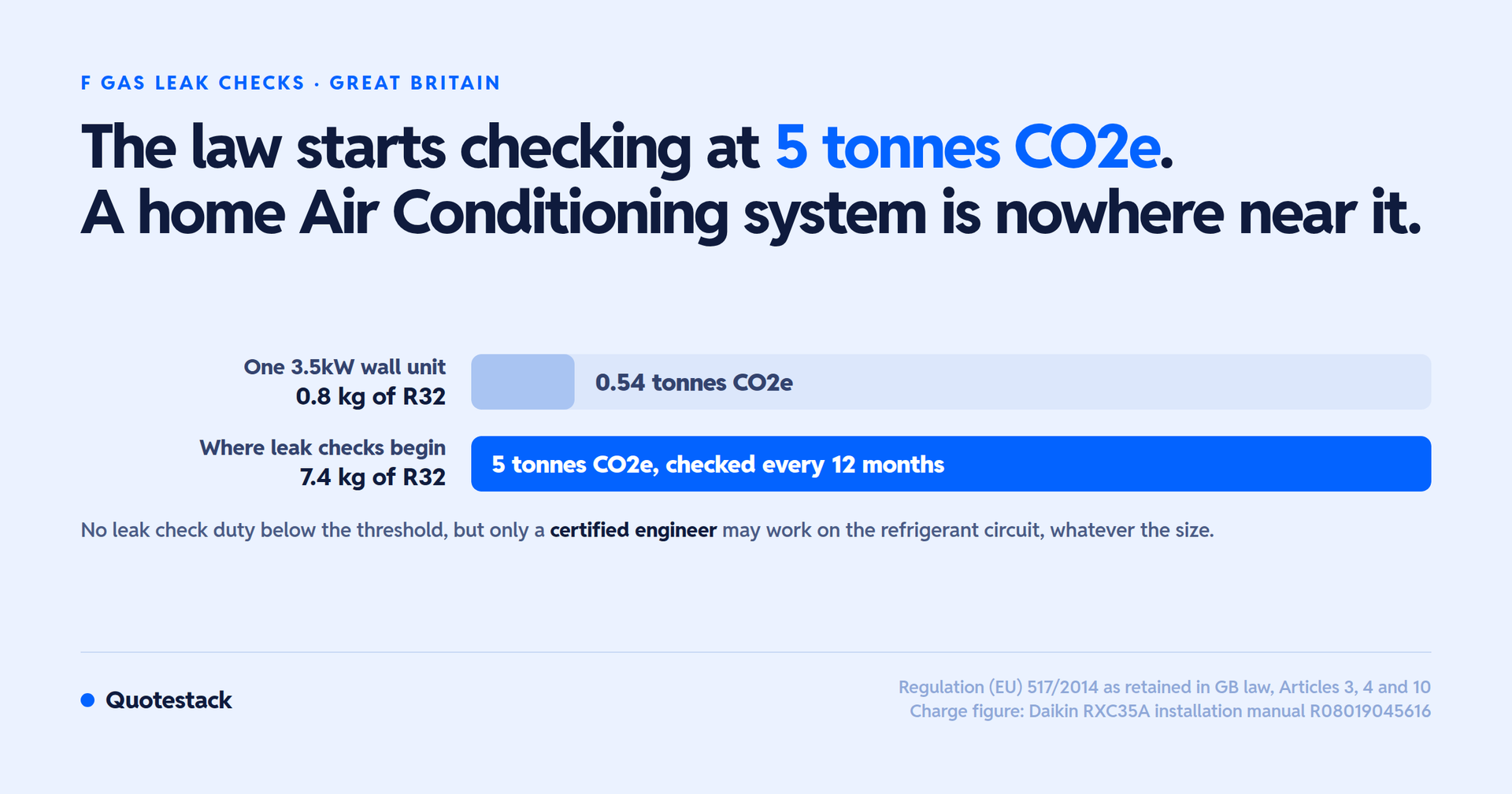
One of the most consistent trends across recent product launches is the move away from older refrigerants and toward R32-based systems, driven by F-Gas requirements that came into force in 2025.
Manufacturers such as Daikin, Mitsubishi Electric, Panasonic, Toshiba and Samsung have all expanded or refreshed their domestic and light commercial ranges to prioritise lower-GWP refrigerants, improved inverter performance, and higher seasonal efficiency ratings.
According to manufacturer technical releases and industry reporting, the goal is twofold: comply with tightening regulations while delivering systems that perform efficiently during longer operating hours — a response to the UK’s warmer summers and extended cooling seasons.
For installers, this has practical consequences. Newer systems tend to be more sensitive to correct sizing, pipe runs, and commissioning, but reward accuracy with quieter operation, lower running costs, and fewer call-backs.
Comparing popular domestic and small commercial systems
Recent product launches have broadly fallen into a few recognisable categories, each suited to slightly different types of work.
High-efficiency wall-mounted splits
Updated ranges such as Daikin’s latest wall-mounted units, Mitsubishi Electric’s domestic series, and Panasonic’s Etherea models are clearly aimed at residential installs and small offices. These systems focus on compact indoor units, low noise levels, and high seasonal efficiency.
They are typically best suited to:
- single rooms or small multi-room homes
- bedrooms, home offices, and living spaces
- customers prioritising low running costs and quiet operation
For installers, these systems tend to be familiar to work with but demand careful attention to pipe routing, condensate management, and airflow placement — particularly in retrofit situations.
Multi-split systems for larger homes
Manufacturers have also refined their multi-split offerings, allowing a single outdoor unit to serve multiple indoor units across a property. Recent updates have improved capacity matching and inverter control, making these systems more flexible for larger domestic homes.
They are most commonly used in:
- properties with limited outdoor space
- homes requiring cooling in multiple rooms
- small commercial premises with several separate areas
However, installers know that multi-split systems introduce additional complexity. Accurate design and load calculations matter more, and poor planning can quickly lead to performance issues or customer dissatisfaction.
Compact ducted and ceiling cassette units
For very small commercial spaces — such as salons, clinics, and small retail units — manufacturers continue to refine compact ducted and cassette systems. Newer models are quieter, slimmer, and easier to integrate into shallow ceiling voids.
These systems are typically chosen where aesthetics or even air distribution are key, but they require more coordination with builders, electricians, and ceiling contractors. Installers working in this space are increasingly expected to advise on layout and airflow rather than simply install equipment.
Instant Quoting Software for HVAC Businesses
Save time, send quotes faster, and grow your HVAC business with confidence

What installers are really comparing — beyond the brochure
While marketing materials emphasise efficiency ratings and smart features, installers tend to judge new products on different criteria.
Ease of installation, availability of parts, commissioning reliability, and manufacturer support often matter more than marginal gains in SEER or SCOP. Industry feedback suggests that engineers value systems that are predictable to work with, particularly during busy summer periods when time on site is under pressure.
Smart controls and app integration are also becoming more relevant, but primarily when they reduce future call-backs or help customers understand how to use systems properly. Overly complex interfaces, on the other hand, can increase post-install support demands.
Closing perspective
The domestic and small commercial HVAC market in the UK now offers more choice than ever before. That is good news for customers, but it places more responsibility on installers to guide decisions.
New product launches are not just about keeping manufacturers competitive — they reflect broader changes in regulation, climate, and customer expectations. Installers who keep up with these changes, understand where each system performs best, and communicate that clearly are better positioned to deliver consistent, profitable work.
New HVAC products will continue to arrive, each promising better efficiency, smarter control, or quieter operation. But for installers on the tools, the real value lies in understanding which systems genuinely suit the spaces they’re being installed in.
As the UK market evolves, successful HVAC businesses will be those that treat product knowledge as part of their professional toolkit — not just something picked up from a brochure.