



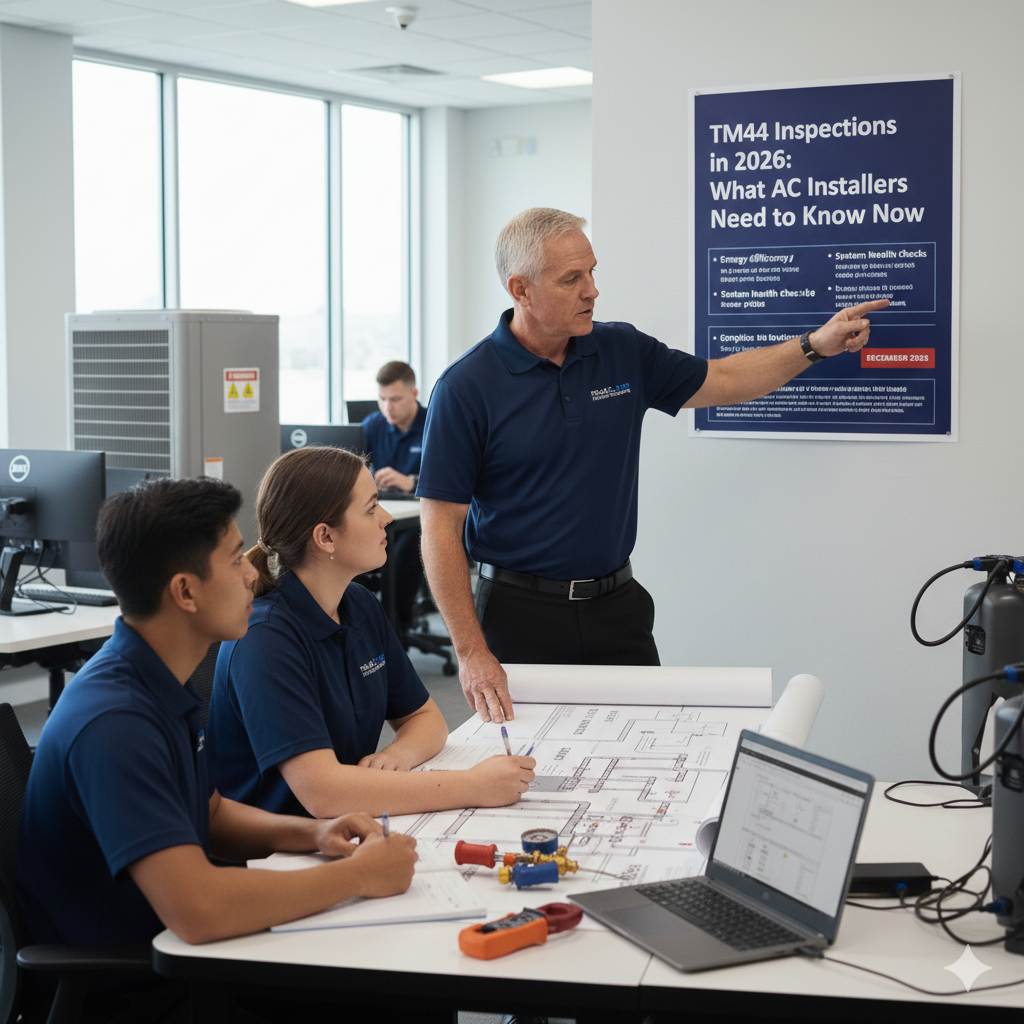
TM44 Inspections in 2026: What Air Conditioning Installers Need to Know Now

TM44 compliance is firmly under the spotlight in 2026
While the regulatory changes were introduced in 2025, 2026 is the year they’re being actively enforced. Local authorities, energy assessors and facilities managers are paying far closer attention to TM44 compliance — and the consequences of ignoring it are now far more serious than they were just a few years ago. For UK air conditioning installers and HVAC business owners, this matters.
TM44 inspections are now directly influencing: how commercial jobs are quoted, how system upgrades are recommended and how professional and compliant your business appears to customers
If you work on systems over 12kW — or advise commercial clients in any capacity — TM44 compliance in 2026 needs to be part of your everyday thinking.
A quick refresher: what TM44 inspections actually cover:
A TM44 inspection is a mandatory energy efficiency assessment of air conditioning systems in non-domestic buildings. It applies when the combined cooling output exceeds 12kW, regardless of whether the system is a single large unit or multiple smaller splits.
The inspection must be:
- carried out by an accredited TM44 assessor
- completed every five years
- logged on the official government register
The assessment looks at:
- system efficiency and condition
- controls and zoning
- maintenance practices
- opportunities to reduce energy consumption
It’s not just a certificate — it’s a documented review of how well (or badly) a building’s cooling system is performing.
What’s different in 2026: enforcement, penalties, and visibility
Although the regulatory framework changed in 2025, 2026 is when enforcement is becoming far more visible.
Historically, TM44 non-compliance was often ignored because penalties were relatively low and enforcement inconsistent. That is no longer the case, in 2026:
- Fines for failing to hold a valid TM44 certificate are typically up to £800 per building
- Additional penalties may apply if documentation cannot be produced promptly when requested
- Enforcement bodies are increasingly cross-checking TM44 certificates against property and energy performance records
This shift means TM44 compliance is no longer something clients can “deal with later”. Many clients are now actively asking installers about TM44 requirements and concerned with wether their systems will be complaint - Placing HVAC installers in a more advisory role than ever before.
Why TM44 now affects quoting and system recommendations
For HVAC businesses, TM44 inspections in 2026 influence far more than compliance paperwork.
Quoting commercial HVAC work
If you’re quoting installations, upgrades or replacements for systems over 12kW, TM44 should be part of the conversation. Clients increasingly expect installers to flag compliance considerations during quoting.
Professional credibility
Installers who can clearly explain TM44 requirements stand out. Facilities managers and commercial clients value contractors who understand both the technical and regulatory sides of HVAC work.
Energy efficiency and cost savings
TM44 inspections often highlight inefficiencies in controls, scheduling, or maintenance. Acting on these recommendations can reduce cooling energy use by 20–30% in some buildings — a strong selling point in 2026’s energy-cost environment.
In short: TM44 awareness strengthens your position as a trusted advisor, not just an installer.
Instant Quoting Software for HVAC Businesses
Save time, send quotes faster, and grow your HVAC business with confidence

What HVAC installers should be doing in 2026
With TM44 firmly on the radar, HVAC businesses should now be taking a proactive approach:
- Ask about TM44 certificates during surveys for commercial jobs
- Factor inspection timelines into system recommendations
- Explain compliance risks clearly to clients — especially those with older systems
- Align system upgrades with inspection cycles to add value and reduce disruption
Even if you don’t carry out TM44 inspections yourself, understanding when they apply — and how they affect clients — is now essential.
Looking ahead: TM44 is part of a wider compliance shift
TM44 inspections are just one piece of a broader move toward:
- higher energy efficiency standards
- improved building performance reporting
- greater accountability for non-domestic HVAC systems
As we move further into 2026 and beyond, it’s likely that compliance checks will become even more automated and interconnected with EPCs, energy audits and net-zero reporting. For HVAC installers, the message is clear: TM44 knowledge belongs in your quoting and advisory toolkit, not as an afterthought.
Installers who understand the requirements, communicate them confidently, and reflect them in professional quotes will be better positioned to win work — and retain long-term commercial clients.