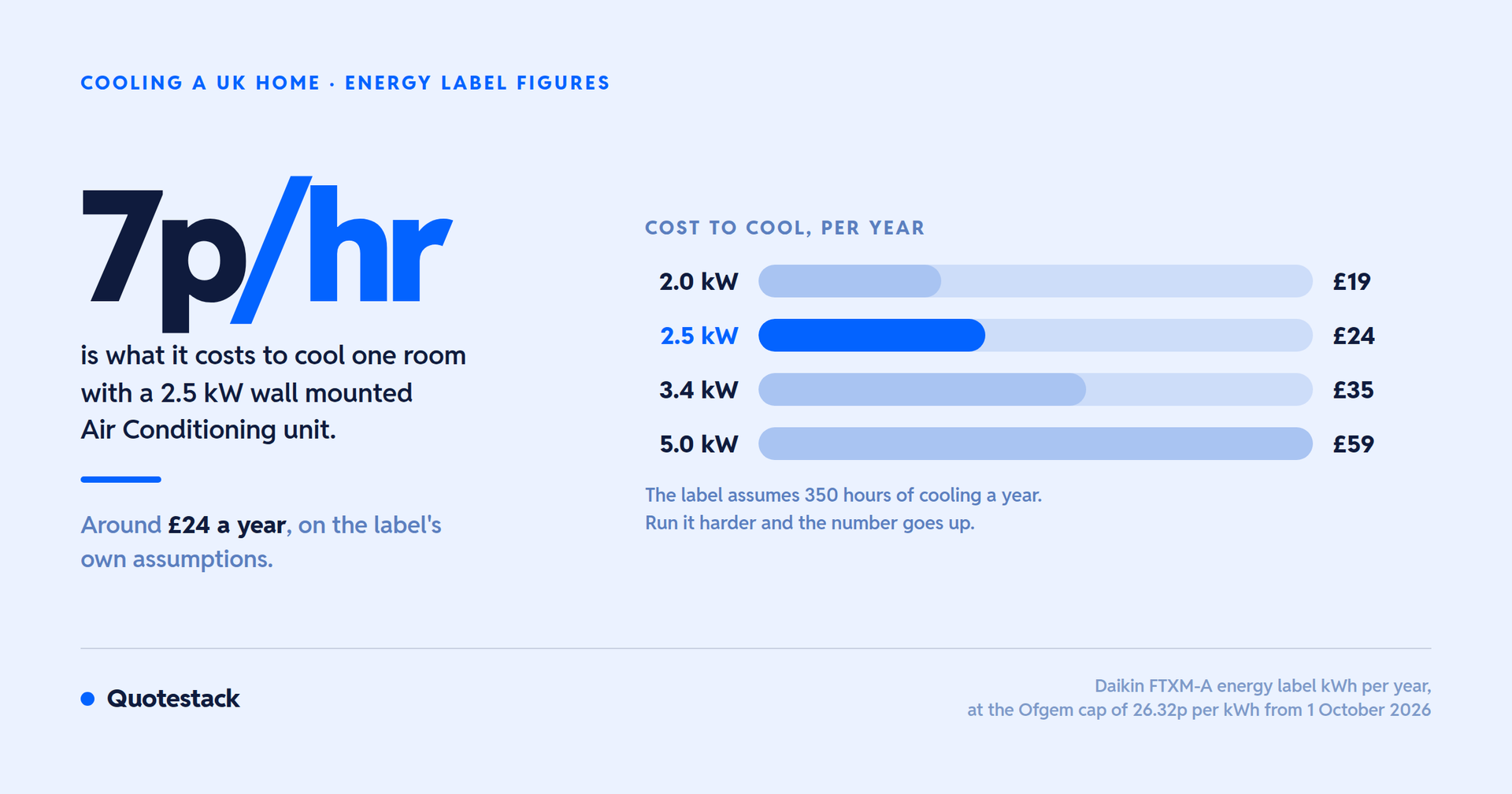
Cooling is cheap. A 2.5 kW wall mounted Air Conditioning unit, the size that goes in a typical UK bedroom, costs
around 7p an hour to run in cooling, and about £24 a year. A 5.0 kW unit for a big living room is roughly 17p an hour and £59 a year.
Those are not estimates. Every fixed Air Conditioning unit sold in the UK has to carry an energy label with its annual electricity consumption for cooling printed on it. Multiply that figure by the price you pay per unit of electricity and you have your answer.
The reason the number surprises people is that heating is the expensive part, not cooling, and most of us only ever think about Air Conditioning in July.
Here is where the figures come from, and the three things that make your real bill different.
The number is already on the unit
Air conditioners in Great Britain are labelled under Commission Delegated Regulation (EU) No 626/2011, which was kept in UK law after Brexit. The label has to show, in the regulation's own words, "annual energy consumption in kWh per year, for cooling and heating, rounded up to the nearest integer".
That cooling figure has a name, QCE, and it is calculated for you. It already accounts for the fact that a modern inverter unit spends most of its life throttled back rather than running flat out, because it is built from the unit's SEER, its seasonal efficiency, not its maximum power draw.
So the sum is simple:
Annual cooling kWh on the label x your electricity price per kWh = your annual cooling cost.
What that works out to in money
Under the Ofgem price cap, the average electricity unit rate from 1 October to 31 December 2026 is
26.32p per kWh. That is slightly higher than the 26.11p that applied over the summer, but VAT has been removed from household electricity bills from 1 October, so the underlying price has come down even though the cap figure went up.
Put the label figures for one manufacturer's current wall mounted range against that price:
- 2.0 kW unit - 74 kWh a year on the label, about £19 a year, 6p an hour of cooling
- 2.5 kW unit - 92 kWh a year, about £24 a year, 7p an hour
- 3.4 kW unit - 132 kWh a year, about £35 a year, 10p an hour
- 5.0 kW unit - 224 kWh a year, about £59 a year, 17p an hour
A second manufacturer's 3.5 kW unit lists 141 kWh a year, which comes out at £37. Different brand, same order of magnitude. This is not a market where one unit costs three times as much to run as another of the same size.
The catch: the label assumes 350 hours
This is the part that almost nobody explains, and it is the honest caveat.
The annual figures are calculated against a fixed reference cooling season. Table 4 of the regulation sets it at
350 equivalent active mode hours a year for a fixed split system. Not 350 hours of the unit being switched on. 350 hours of it actually working at full output equivalent.
The label itself says as much, in its required wording: "Energy consumption XYZ kWh per year, based on standard test results. Actual energy consumption will depend on how the appliance is used and where it is located."
So treat the annual figure as a fair basis for comparing two units, and the hourly figure as the one to use for your own house. If you run a bedroom unit for six hours a night across a three week hot spell, that is roughly 126 hours, and at 7p an hour you are looking at about £9. If someone leaves a 5.0 kW unit running all day every day through a long summer, the number climbs a long way past £59.
The three things that move your real cost:
- How many hours you actually cool. Far and away the biggest factor.
- How hard the unit has to work. A badly insulated south facing room with the blinds up asks more of the same unit than a shaded bedroom.
- Whether the unit is the right size. An undersized unit runs at full tilt and never gets there. An oversized one short cycles. Both cost more than a correctly sized one, which is the whole point of a proper survey.
Watch out for two misleading comparisons
Nameplate power is not running cost. If you take the maximum rated input power off the spec sheet and multiply it by hours, you will get a number far higher than reality, because an inverter unit almost never sits at maximum. The label figure already does the part load maths. Use it.
A portable unit's annual figure is not comparable. Single duct and double duct portable air conditioners are labelled under the same regulation, but Table 4 gives them an active mode period of one hour, not 350. Their annual energy consumption is calculated on a completely different basis, so putting a portable's label figure next to a fixed split's is comparing two different things. Judge a portable on its hourly draw instead.
Heating is where the real money is, and the better story
Every one of these units is an air-to-air heat pump, and the same label carries a heating figure.
For the 2.5 kW unit above, annual cooling is 92 kWh. Annual heating is 647 kWh. Seven times as much. The heating season reference in the same table is 1,400 hours against cooling's 350, which is most of the gap, and heating a room simply takes more energy than cooling one in this climate.
But look at the efficiency. That unit has an SCOP of 5.20, which means it delivers roughly five units of heat for every unit of electricity. At 26.32p per kWh, that is about 5p per kWh of heat delivered.
That is the conversation a lot of Air Conditioning companies are not having with customers. The homeowner is thinking about two hot weeks in July. The system they are quoting for will heat the same room through the winter, cheaply, and for many people that is the bigger half of the value.
What to tell a customer who asks
When someone asks "what will it cost me to run", the worst answer is "it depends". It is true, and it is useless, and it is the point at which a lot of enquiries quietly go cold.
A better answer takes about fifteen seconds:
The unit we would be putting in your bedroom is rated at 92 kilowatt hours a year for cooling on its energy label. At today's electricity price that is about £24 a year, or roughly 7p for every hour it is actually cooling. And it heats as well, at about a fifth of the cost of an electric heater.
Specific, sourced, and it does not oversell. You can put the same numbers on your website and answer the question before anyone picks up the phone.
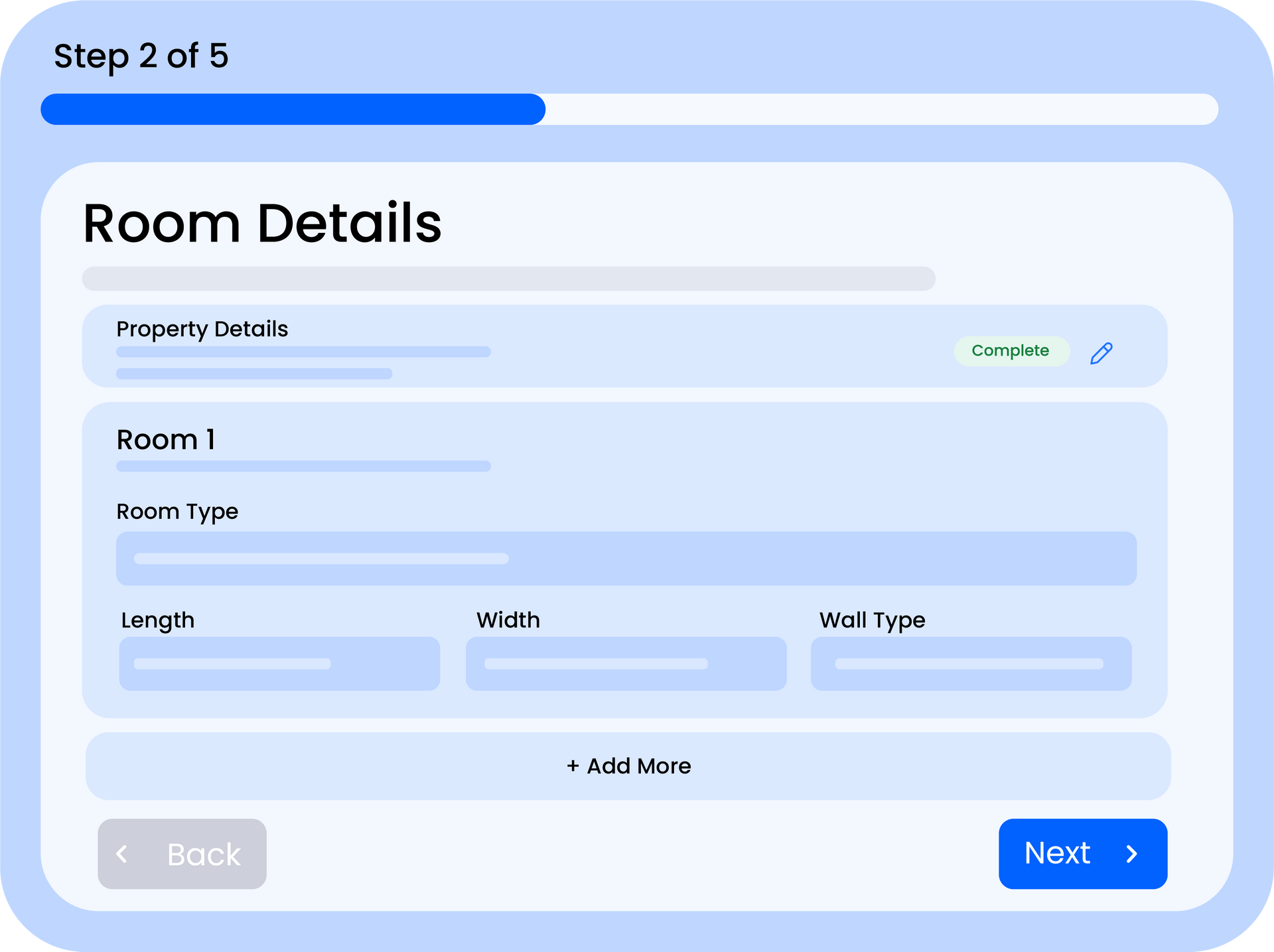
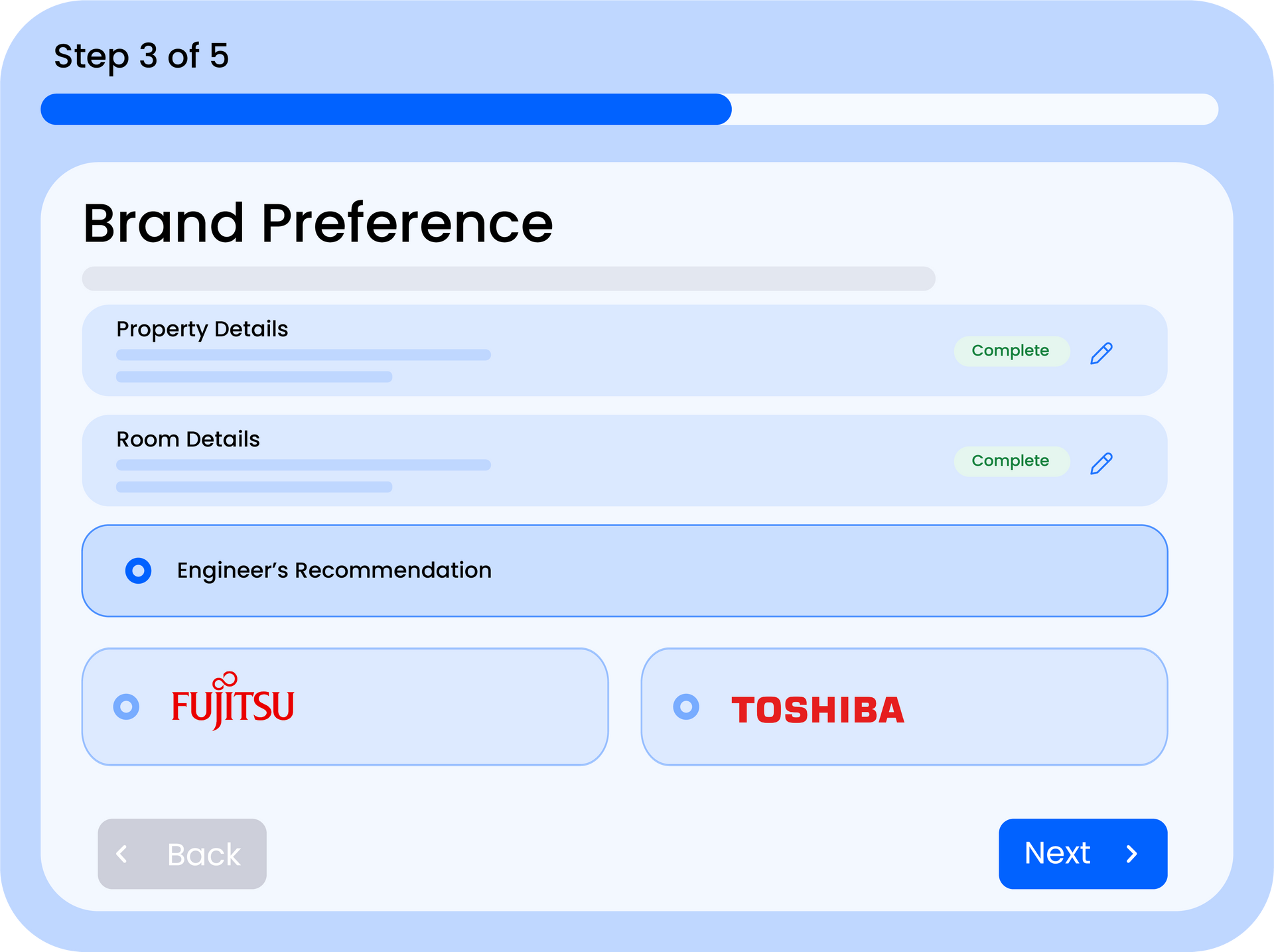
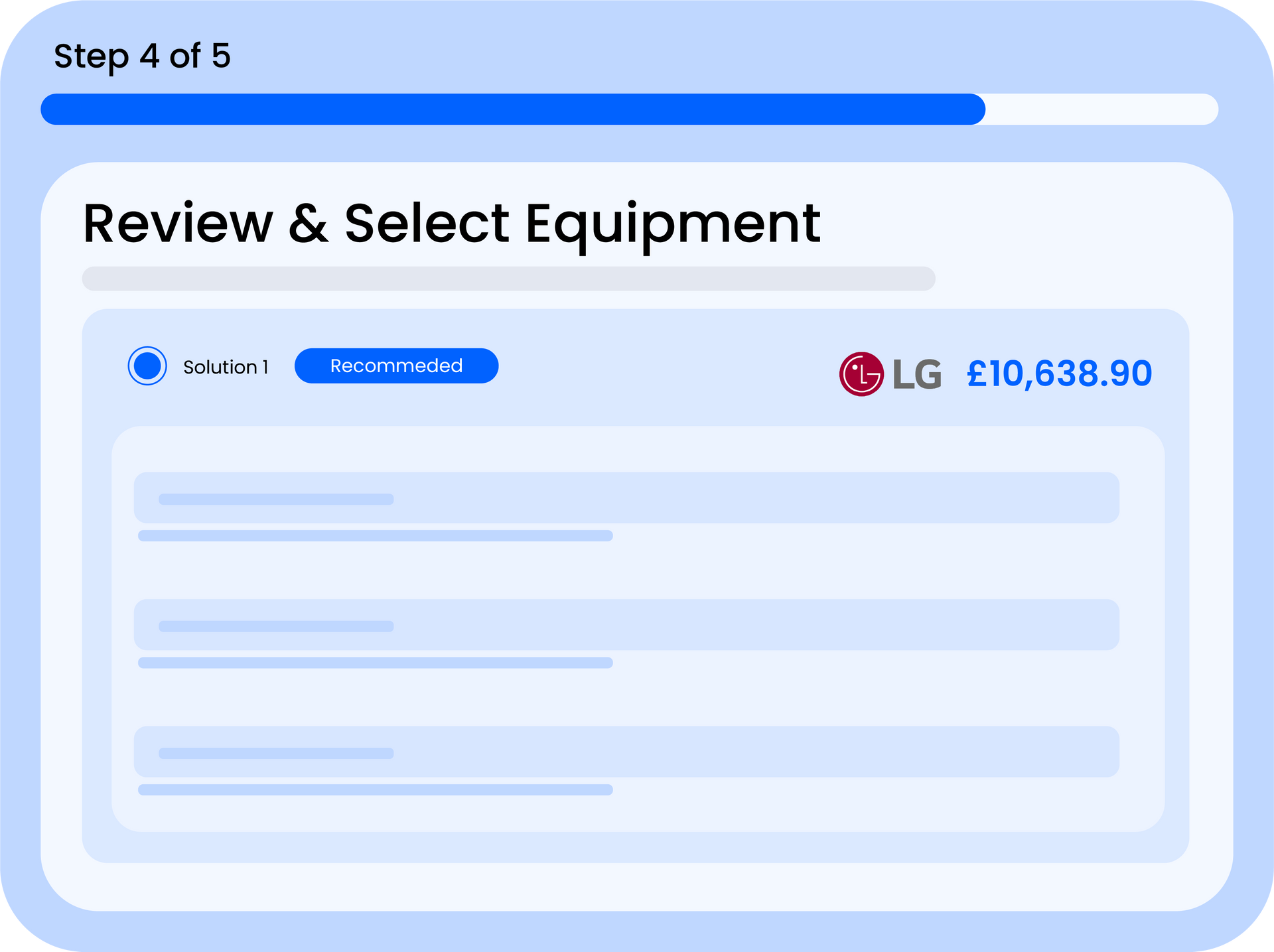
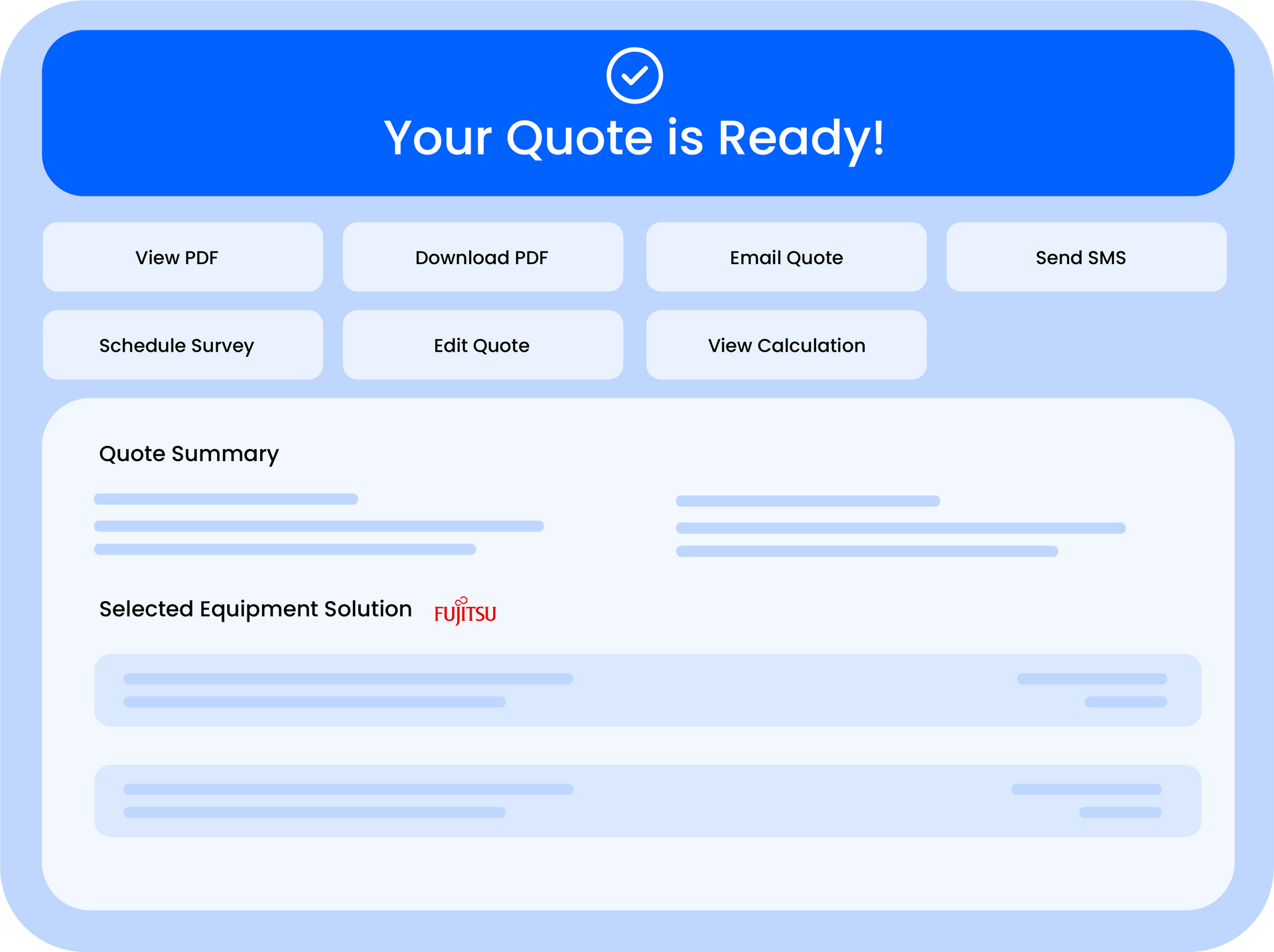
That is the same principle Quotestack works on. It sits on an installer's own website and gives a homeowner an accurate pre-survey price built from that installer's real pricing, so the conversation starts with a number instead of waiting for one.
Quick answers
How much does Air Conditioning cost to run in the UK?
For a fixed wall mounted unit, roughly 6p to 17p an hour of cooling depending on size, and between about £19 and £59 a year on the energy label's standard assumptions.
Where does that figure come from?
The annual cooling consumption printed on every unit's energy label, multiplied by the electricity price. The label figure is required by Commission Delegated Regulation (EU) No 626/2011, retained in UK law.
What electricity price is that based on?
26.32p per kWh, the Ofgem price cap average for Direct Debit customers from 1 October to 31 December 2026.
Is it cheaper than a fan heater or an electric radiator?
For heating, yes, substantially. A unit with an SCOP of 5.20 gives about five units of heat per unit of electricity, where a direct electric heater gives one.
Does the label figure mean my bill will be exactly that?
No. The label is calculated against a fixed 350 hour cooling season and says so on its face. Use it to compare units, and use the hourly figure for your own usage.
Are portable units cheaper to run?
Not usually, and you cannot tell from their annual label figure, which is calculated on a one hour basis rather than 350 hours. They are also less efficient in practice because of the hot air duct.
Why is the heating figure so much bigger than the cooling figure?
Because the standard heating season is 1,400 hours against 350 for cooling, and heating a room in a UK winter takes more energy than cooling it in a UK summer.
Sources
Commission Delegated Regulation (EU) No 626/2011, energy labelling of air conditioners, as retained in UK law, including Annex VII Table 4
https://www.legislation.gov.uk/eur/2011/626
Ofgem, energy price cap unit rates and standing charges
https://www.ofgem.gov.uk/information-consumers/energy-advice-households/energy-price-cap-unit-rates-and-standing-charges
Ofgem, changes to the energy price cap between 1 July and 30 September 2026
https://www.ofgem.gov.uk/news/changes-energy-price-cap-between-1-july-and-30-september-2026
GOV.UK, Breathing space on your energy bill, on the removal of VAT from household electricity bills
https://www.gov.uk/government/news/breathing-space-on-your-energy-bill
Daikin Perfera FTXM-A wall mounted range datasheet, for the energy label figures
https://www.principalclimate.co.uk/assets/ckfinder_library/files/Perfera%20Datasheet%202024.pdf
Eurovent Certita Certification, certified performance data for Mitsubishi Electric MSZ-AY35VGK
https://www.eurovent-certification.com/en/catalog/program/certificate/participant/model/show/201929577
All sources checked on 17 September 2026.