




Why Professional Air Conditioning Businesses Are Moving Away From Spreadsheet Quoting

March 30, 2026

The Tool That Worked — Until It Didn’t

For years, spreadsheets were the default tool for HVAC quoting. They were flexible, familiar, and easy to adapt as a business grew. But in 2026, more HVAC companies are quietly moving away from spreadsheet-based quoting — not because spreadsheets stopped working, but because the way businesses operate has changed.


What once felt efficient now often feels fragile.

The limits of spreadsheets become clearer as businesses grow

Spreadsheets work best when quoting volumes are low and only one or two people are involved. As enquiry numbers increase, cracks begin to show. Files are duplicated, formulas get overwritten, and different versions circulate between engineers and office staff.


Over time, this creates inconsistency. Similar jobs are priced differently. Updates to costs or margins aren’t applied everywhere. And when something goes wrong, it’s rarely obvious where the error came from.

Manual processes struggle to keep up with modern demand

In 2026, HVAC businesses are expected to respond faster than ever. Spreadsheets weren’t designed for speed under pressure. They rely on manual data entry, switching between documents, and a lot of copying and pasting.


When teams are busy, this slows everything down. Quotes sit unfinished, enquiries stack up, and opportunities are lost simply because the process can’t keep pace with demand.

Risk increases as quoting becomes more complex

Modern air conditioning quoting involves more variables than it used to. Different manufacturers, multiple system options, varying labour assumptions, and changing material costs all need to be accounted for.


In spreadsheets, this complexity increases risk. A small error in one cell can affect an entire quote. And because spreadsheets don’t enforce structure, mistakes often go unnoticed until much later — sometimes after the job has already been priced or started.

Why consistency matters more than flexibility

Spreadsheets are often defended because they’re flexible. But in practice, too much flexibility leads to inconsistency. Each person builds quotes slightly differently, even when using the same template.


Professional air conditioning installation businesses are increasingly prioritising consistency — not to remove judgement, but to ensure every quote follows the same internal logic. This makes margins easier to protect, performance easier to measure, and quoting easier to scale.

Instant Quoting Software for Air Conditioning Businesses

Save time, send quotes faster, and grow your air conditioning business with confidence

Share this article

How quoting software supports modern workflows

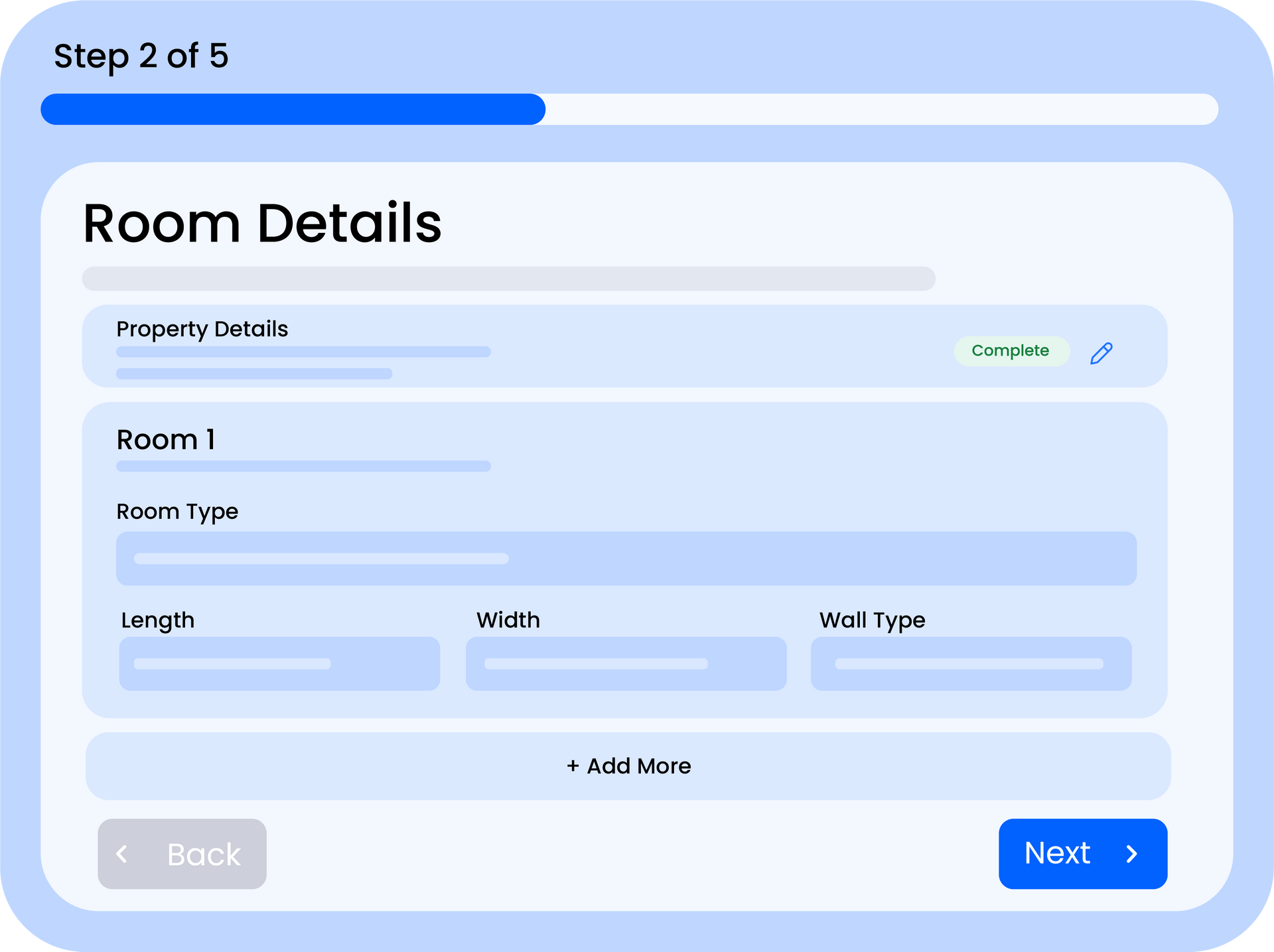
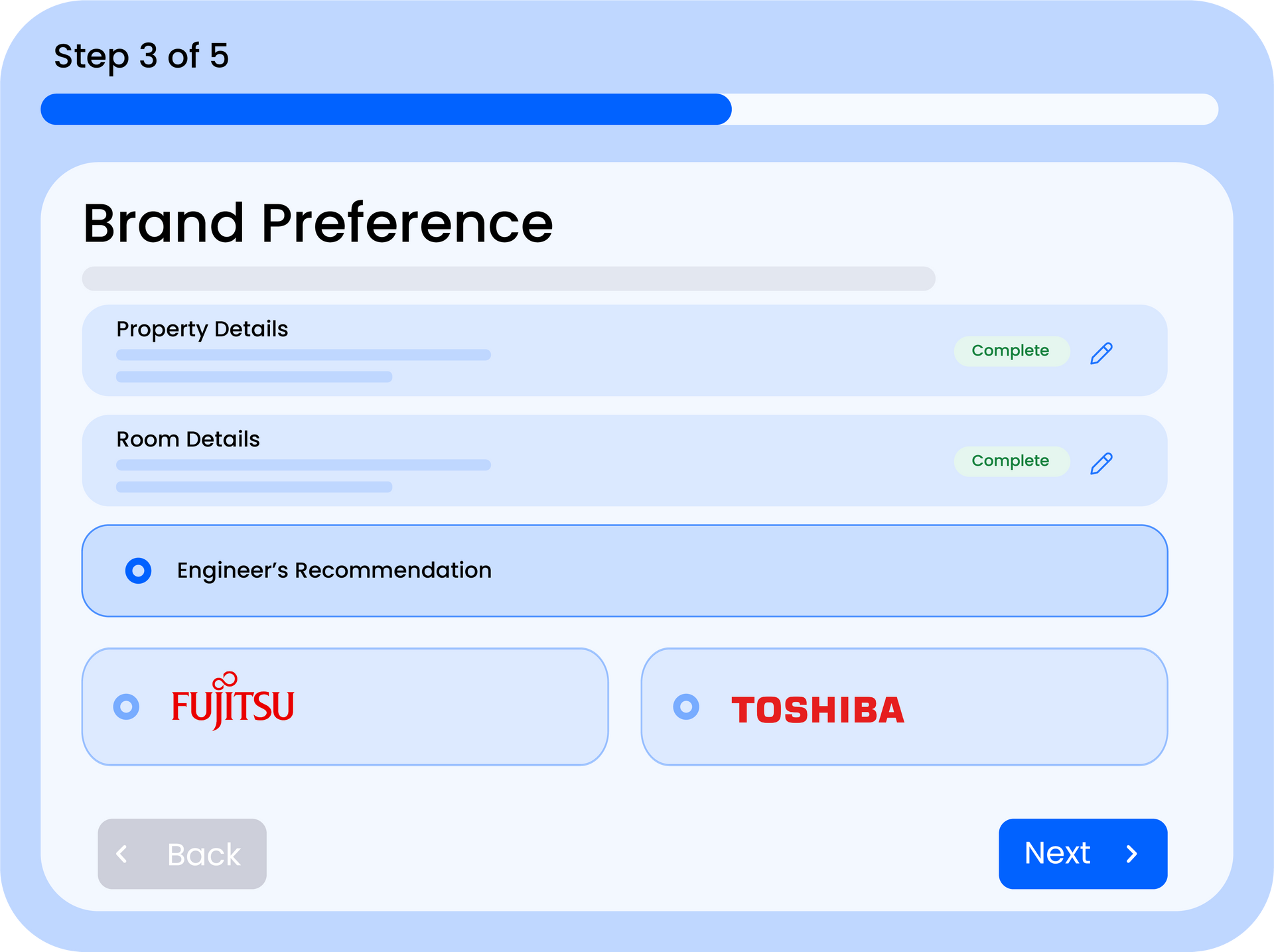
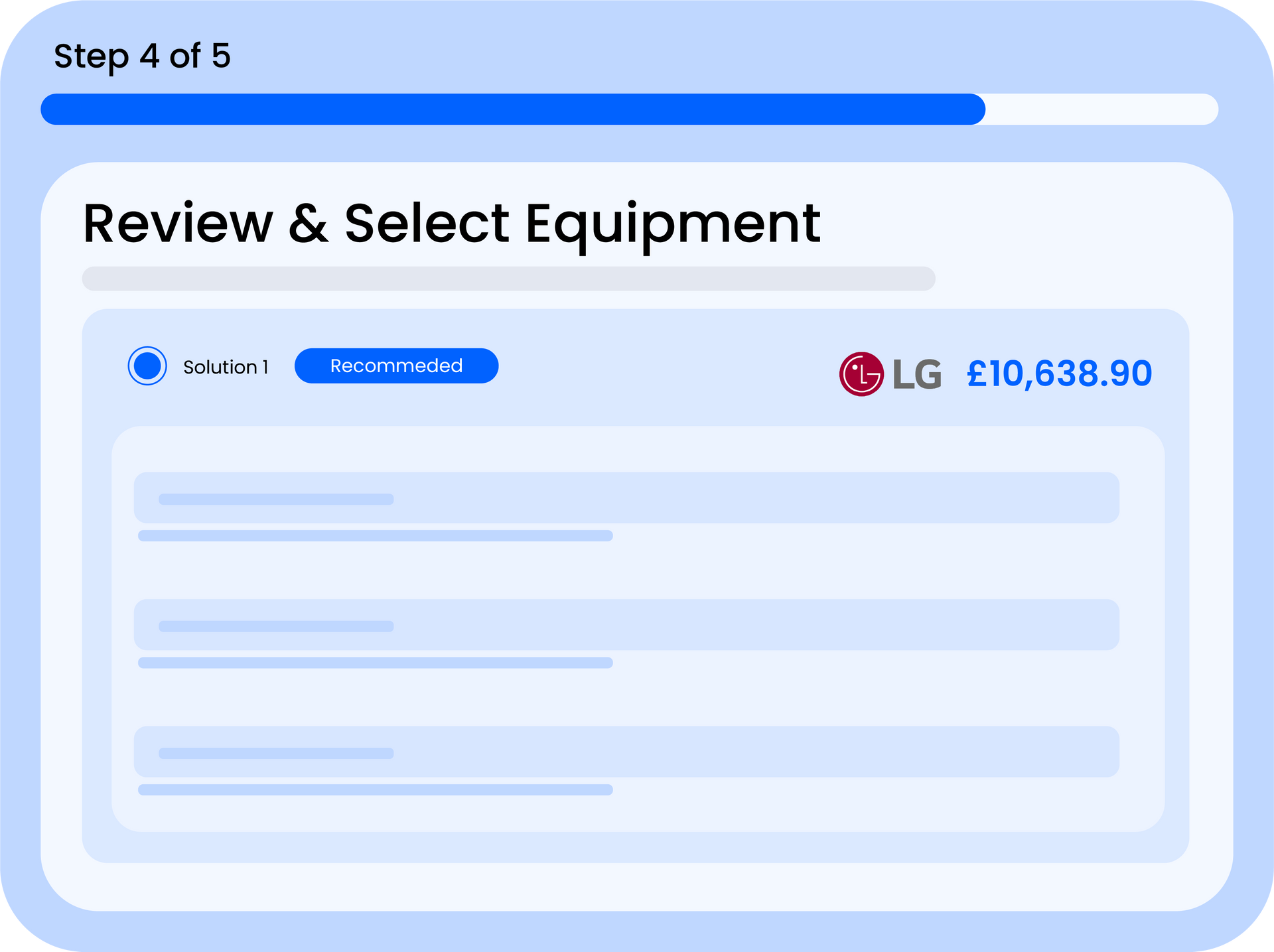
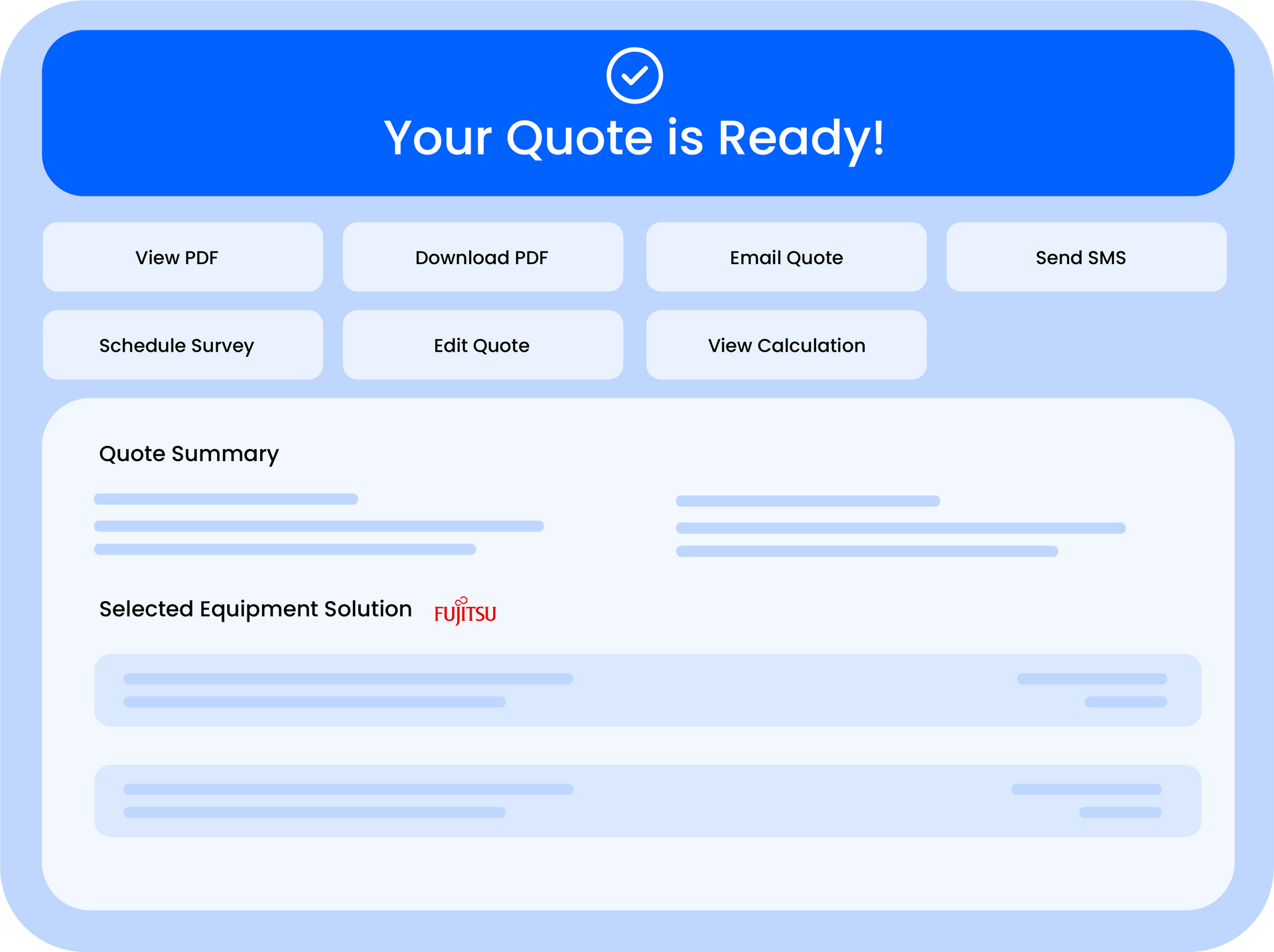
Dedicated quoting software is designed to handle the realities of modern air conditioning businesses. Instead of starting with a blank grid, quotes are built from structured rules — pricing, labour rates, preferred manufacturers, and margins — all defined by the business.


Quotestack supports this shift by providing a framework that replaces spreadsheets without removing control. Air conditioning companies can customise every element of their quoting logic, while ensuring consistency across every quote generated.


The result is fewer errors, faster turnaround, and a more professional experience for customers.

A more resilient approach to growth

As businesses grow, spreadsheets often become a bottleneck rather than a support. They rely heavily on individual knowledge and manual effort, which makes scaling harder and riskier.


In 2026, professional air conditioning businesses are choosing systems that can grow with them — tools that reduce dependency on spreadsheets and support consistency, speed, and clarity at every stage of the quoting process.


Moving away from spreadsheets isn’t about abandoning what worked in the past. It’s about recognising when a business has outgrown them — and adapting before they start holding progress back.

Recent Posts

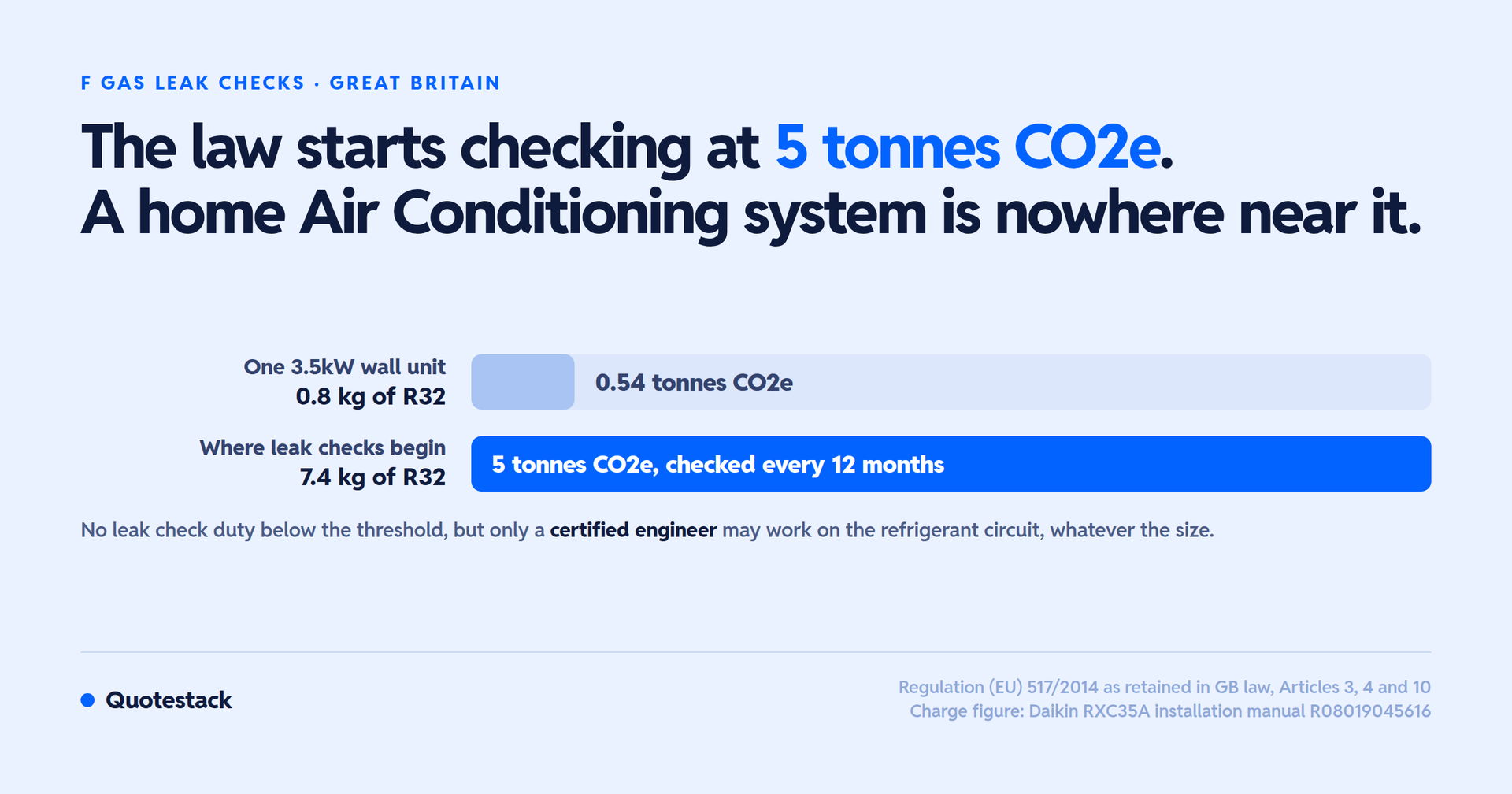
Two bars compared: one 3.5kW wall unit holds 0.54 tonnes CO2 equivalent of refrigerant, while leak c
By Francois Du Plessis • September 28, 2026
Most home Air Conditioning in Great Britain has no legal service requirement. The F Gas leak check duty starts at 5 tonnes CO2e, well above a home system.
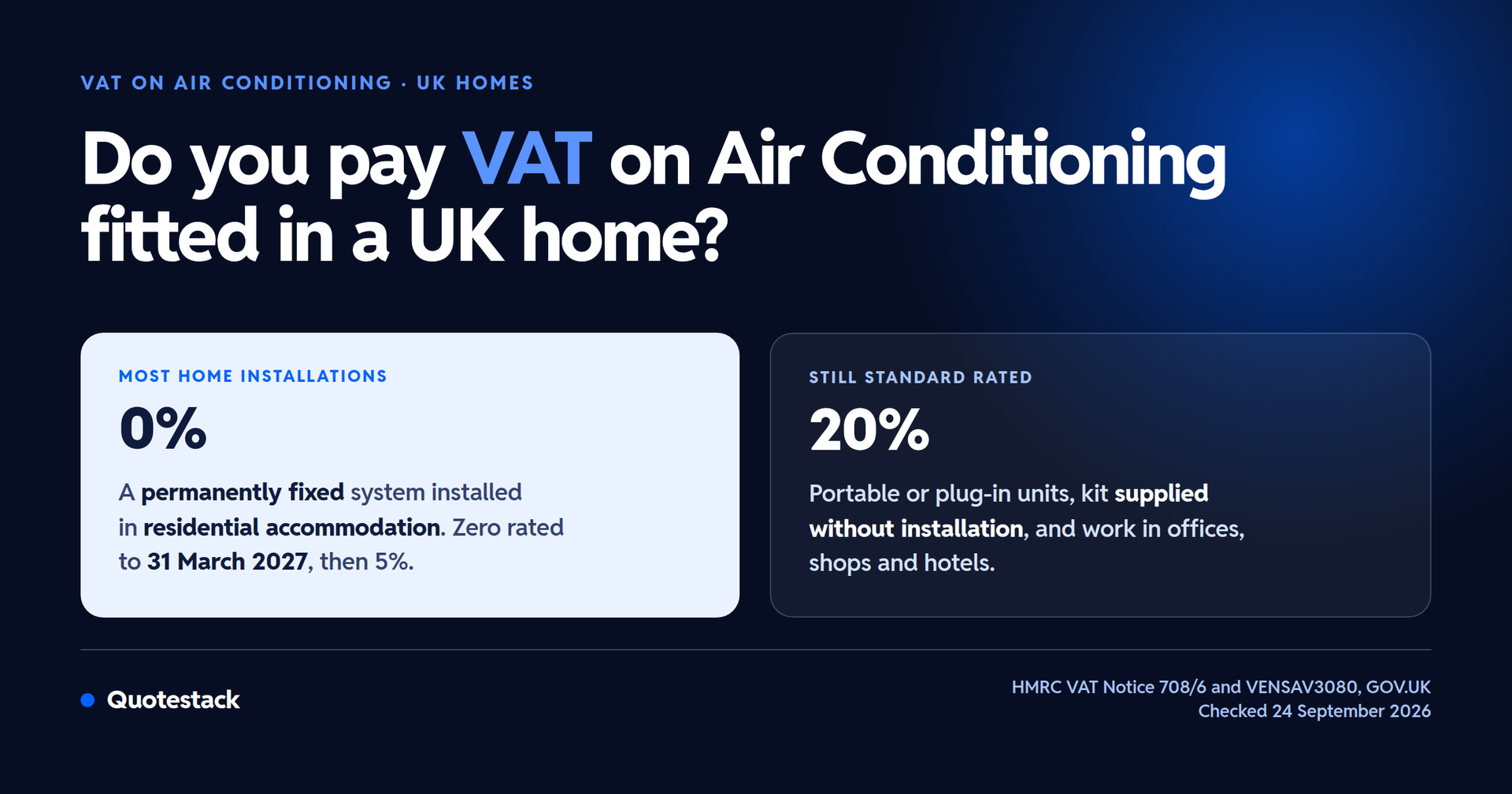
Two VAT outcomes compared for Air Conditioning in a UK home: a permanently fixed system in residenti
By Francois Du Plessis • September 25, 2026
Fixed Air Conditioning installed in a UK home is zero rated for VAT until 31 March 2027. Here is what qualifies, what still carries 20%, and what changes.
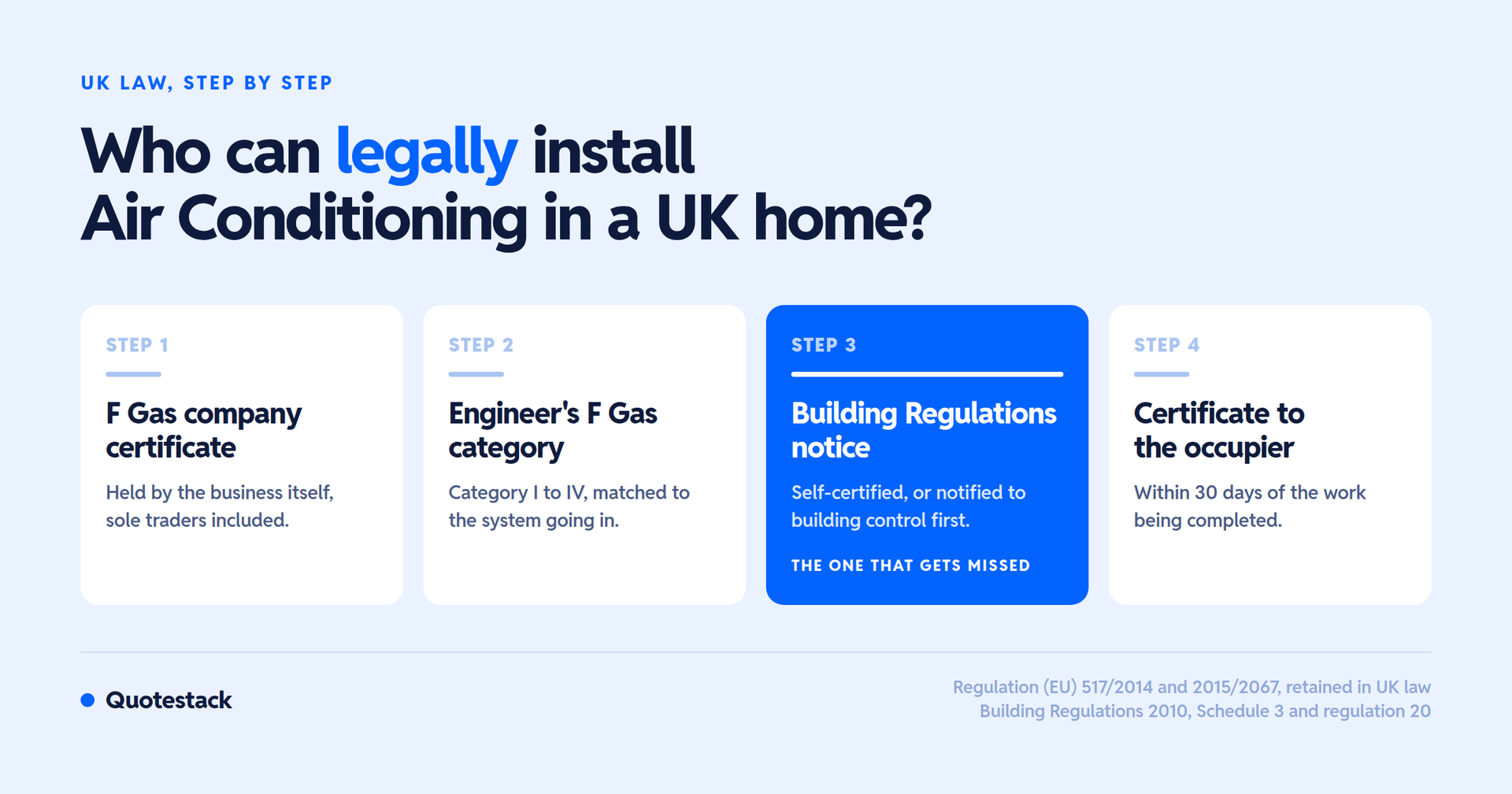
The four legal steps to install Air Conditioning in a UK home, from F Gas certificate to handover.
By Francois Du Plessis • September 21, 2026
The company needs an F Gas certificate, the engineer needs a category certificate, and in England and Wales the install is notified to building control.
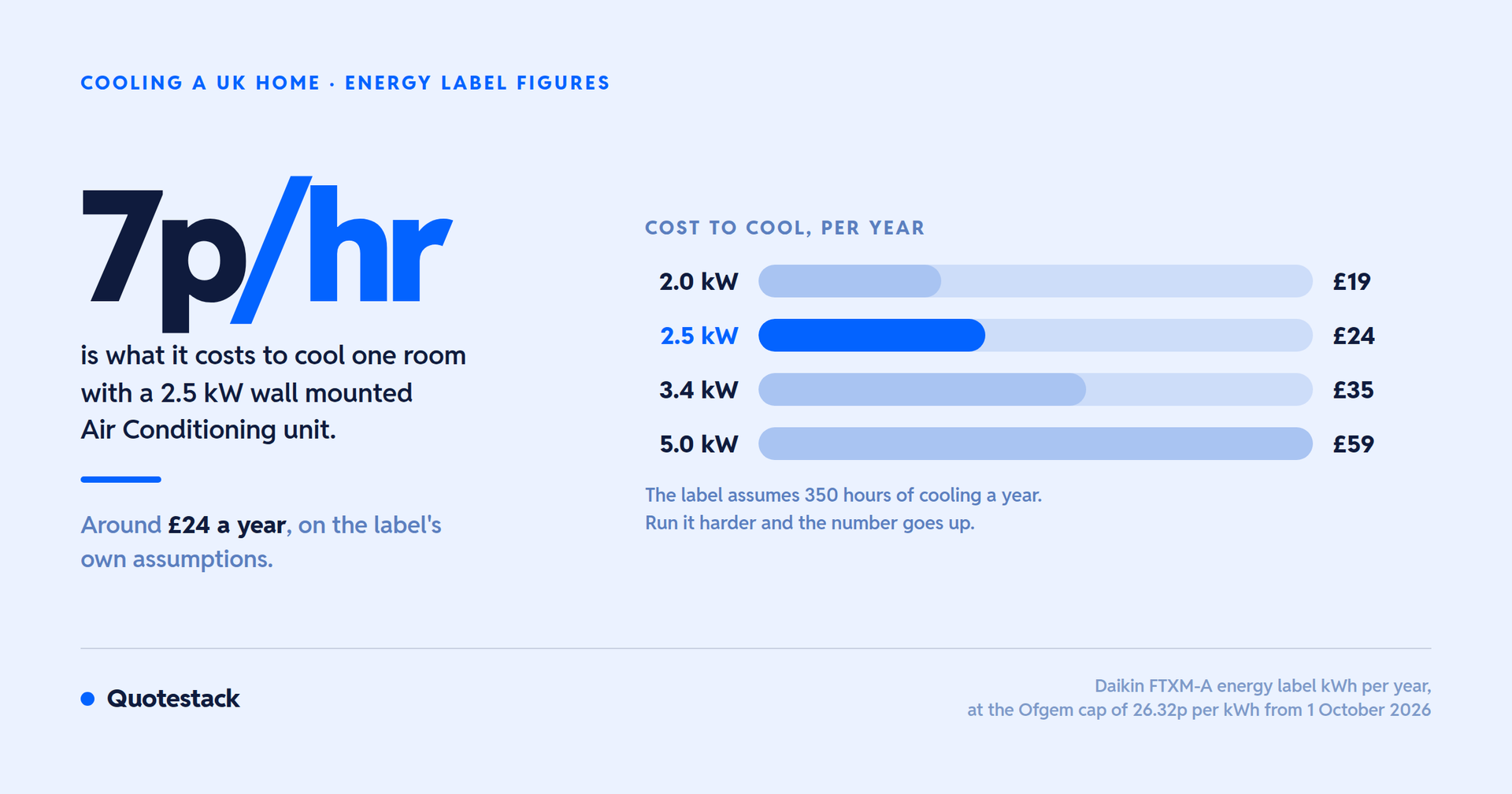
Cooling costs by Air Conditioning unit size: £19 a year for 2.0 kW up to £59 a year for 5.0 kW.
By Francois Du Plessis • September 21, 2026
A 2.5 kW wall unit costs around 7p an hour to cool, about £24 a year on its energy label. Here is where that figure comes from, and when yours is higher.
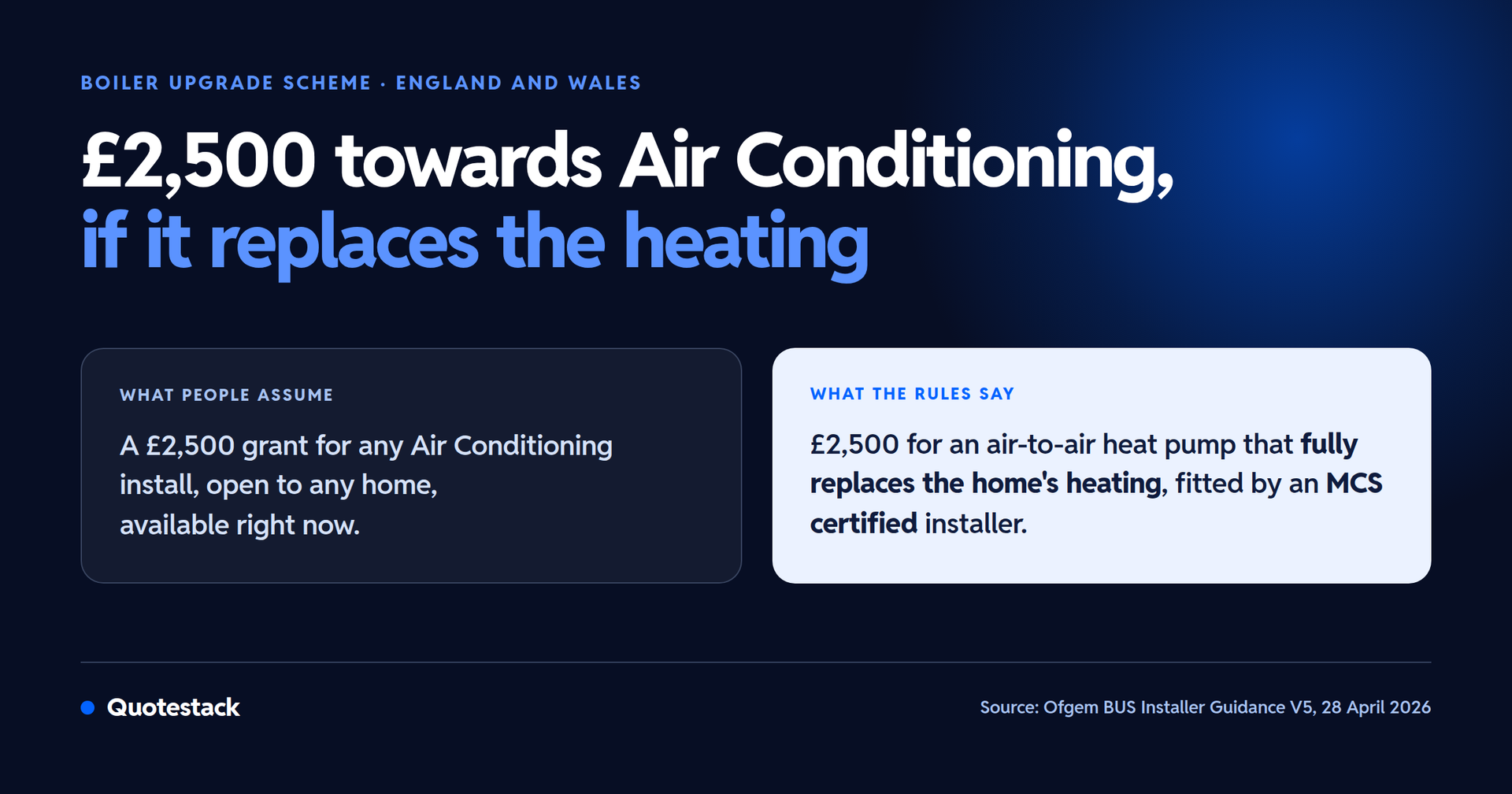
The £2,500 grant needs an air-to-air heat pump that replaces the heating, fitted MCS certified.
By Francois Du Plessis • September 14, 2026
Yes. The Boiler Upgrade Scheme pays £2,500 towards an air-to-air heat pump in England and Wales, but only if it fully replaces the home's existing heating.
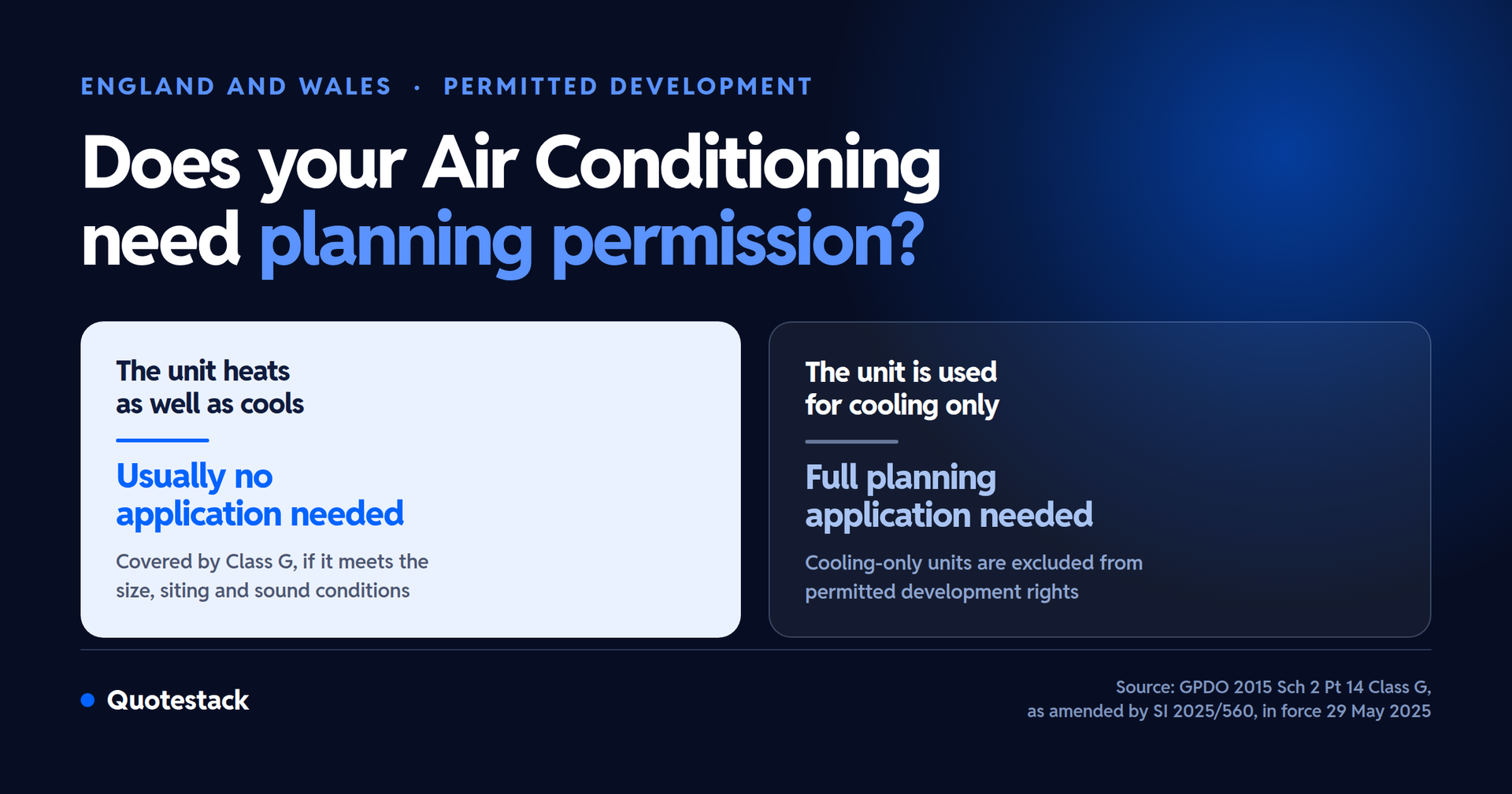
Air Conditioning that also heats usually needs no planning permission, cooling-only units do.
By Francois Du Plessis • September 11, 2026
In England and Wales, Air Conditioning that also heats can usually go in under permitted development. Cooling-only units still need a planning application.

May 29, 2026
Consistency and structure are what separate activity from long-term growth

May 25, 2026
Improving results doesn’t always require more demand

May 22, 2026
A growing sector is creating new opportunities across the workforce

May 15, 2026
Demand is building steadily, not just seasonally